Andrei Ianculescu, Head of Project & Development Services at Cushman & Wakefield Echinox, talked to Property Forum about the expansion of design and ESG advisory services, the industrial and logistics sector's growth post-Schengen, and the importance of independent project management for tenant fit-outs. Ianculescu also emphasised the potential in secondary cities and the increasing relevance of aligning projects with sustainability standards.
What are the most significant strategic opportunities you have identified for Cushman & Wakefield Echinox in the Romanian real estate market for the coming year?
One of our key priorities for the coming year is to expand our design services—including Design & Build solutions—and to strengthen our ESG advisory offering. These services are increasingly essential as clients seek integrated solutions that combine technical expertise with sustainability compliance, delivered by renowned consultants who can draw on global best practice and lessons learned, calibrated to local market requirements.
At the same time, we recognise the need to educate and train our clients and partners on technical consultancy services. In Romania and across CEE, we still need to explain the added value and necessity of these services. In Western Europe, the focus is no longer on the ‘why’, but on clarifying specific requirements; and in the U.S., clients are increasingly requesting specialised technical services as standard. This gap represents both a challenge and an opportunity for us to position ourselves as thought leaders and trusted advisers.
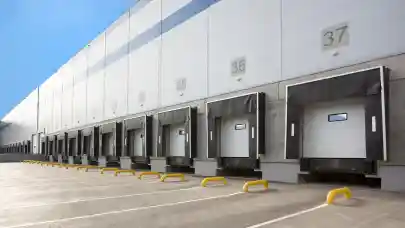
Another major opportunity lies in industrial and logistics expansion, as Romania is emerging as a nearshoring hub for European supply chains, supported by Schengen Area accession and infrastructure upgrades such as the A7 motorway and enhanced connectivity to the Port of Constanța. This trend is creating strong demand for modern logistics facilities and technical project management expertise.
We will also focus on ESG and green advisory, as compliance with the EU Taxonomy and the CSRD is now mandatory for investors and developers. ESG‑certified assets attract premium rents and financing, so we plan to expand our technical due diligence and sustainability consulting, including certifications such as BREEAM, LEED, WELL, and RoGBC Green Homes.
Finally, we see significant growth potential in secondary and tertiary cities—Iași, Brașov, and Oradea—which are attracting investors due to lower costs and improved infrastructure. This regional diversification will allow us to capture new demand streams beyond Bucharest.
How has the demand for technical project management and due diligence services evolved in Romania, and what non‑traditional risks or challenges are C&W projects increasingly facing today?
Demand for technical services has surged as deals grow more complex, regulations tighten, and green financing requires rigorous due diligence.
Recent large transactions and growing mandates for full project management and technical audits highlight how critical these services have become for closing deals within business‑case assumptions and resource‑allocation constraints.
Demand for office space has risen steadily in recent years. At the same time, we observe a clear shift in landlord strategies: they are increasingly offering tenants a broader range of value‑added services, including Design & Build solutions for both office and industrial properties. In the past, only a few landlords provided full‑service packages, but this number is now rising—even though, in some cases, this approach can create a potential
conflict of interest.
When a landlord acts both as the lessor and the fit‑out contractor, objectives may diverge: while the tenant expects cost transparency and quality, the landlord may prioritise delivery speed or profitability. It is therefore essential to ensure clear contractual terms, transparent pricing, and, ideally, independent oversight to protect tenant interests.
Moreover, such oversight is advisable even before the final selection of office space, so that technical and local regulatory components are properly incorporated into the decision‑making process.
Given these potential conflicts of interest, we strongly recommend that—even when a project is implemented by the landlord—tenants should engage an independent third‑party project management firm. This ensures transparency, protects the tenant’s interests, and provides professional oversight throughout the design and construction phases.
What initiatives have improved project delivery timelines or significantly reduced costs on C&W projects in the past year?
We have implemented project‑management and snagging software—such as PlanRadar—to streamline communication, track progress in real time, and reduce delays caused by manual reporting. This has resulted in faster issue resolution and improved transparency among all stakeholders.
Our design team now conducts early‑stage technical analysis to identify risks and optimise layouts before tendering. This approach has significantly reduced design changes during execution, saving both time and cost.
Even though labour costs have increased and margins tightened, we actively educate clients on value engineering and alternative specifications to keep implementation costs under control. As a result, we have maintained competitive pricing without compromising quality.
What is your philosophy on retaining and upskilling talent in a competitive real estate market?
Our philosophy on retaining and upskilling talent: ‘People stay where they grow and feel valued.’
We focus on four pillars:
· Right person, right project – matching skills and interests with project type and complexity.
· Continuous learning through real work – every project is a learning opportunity.
· Shared‑knowledge culture – lessons learned are not kept in silos; they are shared across the team.
· Multi‑disciplinary team – our team members bring diverse and complementary expertise and offer broader viewpoints, enabling innovative solutions, risk mitigation, adaptability, and overall problem‑solving effectiveness.
We allocate projects based on each team member’s strengths and growth goals. We map their skills, certifications, and career objectives, then assign projects that match their expertise while stretching them slightly—for example, someone experienced in office fit‑outs may take on a logistics project to learn industrial standards.
We also ensure diverse exposure by rotating team members across different market segments—office, industrial, and residential—as well as varying project sizes, from small refurbishments to large greenfield developments. Complexity is another factor, moving from simple fit‑outs to projects that require BREEAM or WELL certifications or compliance with the EU Taxonomy.
Finally, we share lessons learned after every project. We run short, practical sessions and document key insights in a shared knowledge base—such as common permit delays, sustainability solutions, and cost savings.
How do your team’s project management processes directly support the company’s ability to secure new mandates and enhance its competitive edge in the market?
Our project‑management approach is designed to add value from the very first stage of a leasing or development project. We involve our technical services team early in the process to perform comprehensive technical analyses, prepare detailed space‑planning layouts, and develop accurate budgets. We also integrate technical criteria into decision‑making for space selection, ensuring that clients choose locations that meet operational and compliance requirements.
We incorporate sustainability from the very start—whether selecting office or industrial spaces or evaluating land for development. By combining technical know‑how with sustainability advice, we help clients make smart decisions that meet ESG goals and legal requirements.
This proactive approach sets Cushman & Wakefield Echinox apart, builds client trust, and positions us as a true partner—not just a service provider—helping us win new projects and remain competitive.
How is your Project Management Department adapting its approach to ensure compliance or implement best practices related to sustainability for office, industrial, and residential projects in Romania?
Our Project Management Department now integrates sustainability and compliance from the very beginning of each project. For office, industrial, and residential developments, we review technical designs early, include energy‑efficiency and ESG criteria in space selection, and prepare budgets that reflect green‑building standards. We also advise clients on green certifications such as BREEAM, LEED, and WELL, and ensure compliance with Romanian nZEB regulations and relevant EU directives.
To strengthen this capability, we expanded our sustainability team by adding an additional specialist this year. This proactive approach helps deliver projects faster, meet legal requirements, and support clients’ sustainability goals. Our strategy is to become a one‑stop shop for our clients from a sustainability perspective, enabling us to recommend and deliver efficient, tailor‑made solutions.
For office buildings, we start early with energy modelling to ensure compliance with nZEB standards. We also select healthy materials and request certificates to meet WELL and BREEAM requirements.
For industrial and logistics projects, we set strict insulation and air‑tightness targets for warehouses, design roofs to support solar panels, and prepare for EV‑charging infrastructure.
Our project‑management approach has evolved significantly. Every project plan now includes sustainability KPIs for energy, water, and waste. All project managers have been trained in the EPBD, the EU Taxonomy, and certifications such as BREEAM and WELL.