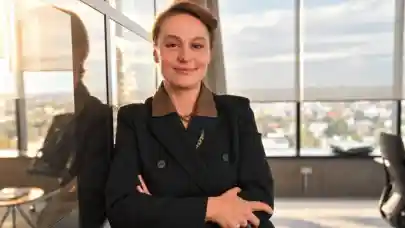
Gránit Asset Management is pursuing a focused investment strategy across a corridor of Central and Eastern European capitals. In this interview, Álmos Mikesy, CEO of Gránit Asset Management, explains the thinking behind the firm’s “5B Strategy”, why high-quality offices remain a core part of the portfolio and where the company sees the best entry opportunities as the regional real estate cycle begins to shift.
Your investment focus is clearly defined geographically. How do you decide which cities truly have the scale, liquidity, and long-term fundamentals to justify sustained capital allocation?
Our approach is governed by what we call the 5B Strategy, targeting five key capital cities:
• Budapest,
• Belgrade,
• Bucharest,
• Bratislava, and
• Vienna (Bécs in Hungarian).
We chose these markets because they form a compact, high-growth corridor that serves as a strategic bridge between Western Europe and fast-developing eastern economies.
Rather than building globally dispersed portfolios, we concentrate where we can maintain deep local knowledge and operational control. While international institutional players often view individual CEE markets as too small on their own, we present them as a unified, scalable investment universe that offers a rare combination of EU-standard legal security and yields that remain significantly more attractive than mature Western markets.

Álmos Mikesy
CEO and Chairman of the Board
Gránit Asset Management
Office remains a central pillar of your portfolio. In light of hybrid work trends across Europe, what gives you confidence in the long-term performance of high-quality office assets?
The "B" cities in our strategy possess a unique urban fabric; they are more "livable" in scale than Western European metropolises, leading to significantly shorter commute times. Consequently, office-based work remains the cultural and operational norm in our region, and home office trends have had a much lower impact on occupancy rates than in the West.

We are seeing a clear "flight to quality" where tenants prioritise ESG-compliant, modern spaces that function as community hubs. As CEE continues to serve as a cost-effective alternative for high-value-added service centres, we expect stable underlying demand for premium assets to persist.
In an environment where yields, financing costs, and tenant demand can shift quickly, how do you ensure that your portfolio remains resilient across cycles while still delivering competitive returns?
The 5B Strategy is engineered as a crisis-resistant product. Resilience, for us, comes down to our fully integrated, in-house operating platform. Our internal motto is: "We work for every single basis point".
By managing our assets through dedicated internal teams – such as our Grandum subsidiaries in Hungary, Serbia, and Romania – we maintain an "ownership mindset" that allows us to maximize asset performance even in turbulent cycles. Agility and care of this level simply cannot be outsourced.
Some of your target markets sit inside the eurozone, others outside it, and some are outside the EU altogether. How do you approach risk pricing across such a diverse regulatory and macroeconomic landscape?
This diversity is a strength, not a drawback. Most countries in our 5B footprint belong to the EU, providing solid legal security. However, we also look at markets like Belgrade, which, despite its non-EU status and higher risk category, has shown a consistently vibrant and high-performing office market for several years.
We price risk by balancing the stability of the eurozone (Vienna, Bratislava) with the higher growth trajectories and attractive entry pricing of markets like Bucharest and Belgrade. This mix allows us to target robust, double-digit euro yields for our investors.
Timing has become increasingly important in this cycle. How do you assess entry points today, and where do you see the most compelling value opportunities over the next two to three years?
For those looking at the numbers, the "early mover" advantage is currently at its peak. We are entering a phase where the macro-environment is shifting; as interest rates stabilise and regional growth outpaces the EU average, we anticipate significant yield compression across our core markets over the next 24 months.
There is a narrow tactical window to secure prime assets before pricing fully reflects this recovery. Currently, we see immense value in Bucharest, where we entered at very attractive yields, and in Budapest, where leasing activity is showing renewed momentum heading toward 2026. Furthermore, we are in advanced negotiations for our first Class A acquisition in Bratislava to capitalise on the region’s tightening spreads. Our value proposition is built on capturing this upside before the next wave of institutional liquidity arrives
You operate with strong in-house asset and property management capabilities. In a market where margins can be tight, how much of performance ultimately comes down to operational execution rather than acquisition pricing?
Acquisition pricing gets you in the door, but operational execution keeps you in the building. In a tight-margin environment, the ability to manage technical standards and sustainability credentials internally is a key differentiator.
By having approximately 150 employees in Budapest and 30 in Belgrade dedicated to our assets, we ensure that our buildings remain "future-proof" and attractive to high-covenant tenants. High-quality asset management is what preserves value over the long term.
If we look ahead to the next 18–24 months, what are the key priorities for Gránit Asset Management, and how do you want the platform to be positioned within the wider European investment landscape?
Our primary goal is to complete the 5B geographical roadmap by securing our first asset in Bratislava and adding a landmark property in Vienna. However, we are also evolving beyond our traditional core. A major milestone in this regard is the Park Center acquisition, which signals our growing dominance in the retail sector. Our vision is to scale this expertise across the 5B corridor and neighbouring countries, positioning Gránit AM as a diversified, multi-sector powerhouse.
We are also diversifying our capital sources through the Gravitas Hungary Real Estate fund. By participating in Hungary’s Guest Investor Program, we are opening our regulated funds to global investors seeking a secure path to the EU. This creates a powerful synergy: we provide international capital with a gateway to the CEE growth story, while strengthening our own capacity for the next "big move." We want the market to see us as the premier institutional bridge to the region's most resilient yields.
Readers interested in Gránit Asset Management’s investment offering are invited to contact the team at investment@granitam.com.