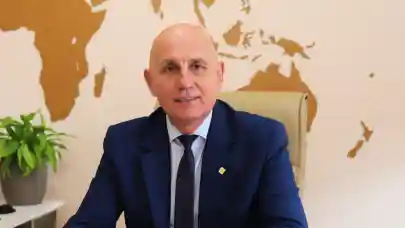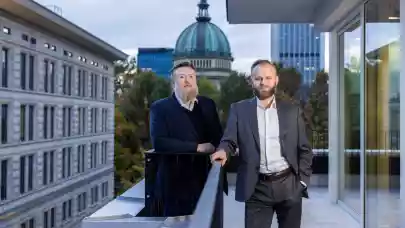
Institutional rental housing and student accommodation are expanding rapidly across CEE as urbanisation, housing shortages and changing lifestyle patterns reshape demand. At the same time, investors are increasingly exploring conversions, hybrid living concepts and heritage revitalisations to create resilient assets in prime locations. In this interview, Peter Noack, Founding Partner and CEO of Zeitgeist Asset Management, and Tomasz Dąbrowski, Managing Director of Zeitgeist Asset Management Poland, discuss the outlook for PRS and PBSA, the growing role of flexible living models and where they see the most promising value-add opportunities in the current market environment.
ZEITGEIST has positioned itself as both an operator and developer across PRS and PBSA. How do you see demand for professionally managed rental housing and student accommodation evolving in 2026 across your core markets?
Peter Noack: We take a long-term view of our developments to ensure steady returns for our investors. Our largest portfolios are currently in the Czech Republic and Poland, where we manage around 1,000 long-term rental apartments and 2,000 student beds. We’re also active in Germany, Hungary, and Italy, but the CEE region stands out for its superior profitability. Both Poland and the Czech Republic are experiencing robust, sustained growth. The PRS market here is propelled by urbanization, demographic shifts, and a significant housing shortage. We project that soaring property prices, rising interest rates, and inflation will drive 25% of households toward institutional rentals in the near term—ones offering premium quality and sustainable amenities. This is borne out by our new projects, which lease up at lightning speed and maintain a consistent 98% occupancy rate.
Tomasz Dąbrowski: In Poland, a key driver is the surge in international students, fueled by ambitious, long-term government programs. The goal is to lift their share from 9% to 15% over the next five years. This coincides with a massive shortfall in student housing, projected to hit 400,000 beds during that period. It’s a prime opportunity for us, so we’re converting older office buildings into dorms and developing ground-up mixed-use complexes with dedicated student spaces.
With the opening of ZEITRAUM Racławicka in Kraków, combining student housing and serviced apartments, what does this hybrid model tell us about changing urban living patterns?
Tomasz Dąbrowski: It tells us that urban living is becoming far more flexible, diversified and service‑driven across age groups and lifestyles. Instead of rigid categories like “dormitory” or “residential block”, we are moving towards multi-purpose living platforms that can simultaneously serve students, young professionals and corporate guests under one roof.
Remote and hybrid work also mean people increasingly choose districts with strong connectivity, good services and reliable transport links. Young people’s expectations have shifted: they want quiet, well-designed space and a “grown‑up” apartment that can evolve with them as they move from studies into work and eventually start a family, requiring more privacy, space and quality.
From an asset manager’s perspective, an operationally hybrid project like ZEITRAUM Racławicka is a way of future‑proofing the building. Today, it offers 249 student beds, including diverse communal areas, alongside 182 fully furnished serviced apartments. We deliberately designed it so that, over time, it can be flexed into 100% PRS, or reconfigured to add more student rooms, depending on where demand is strongest.
The transformation of the former Táborská office building in Prague into student housing marks another revitalization project. What makes office-to-living conversions viable today, and where do you see further opportunities?
Peter Noack: Conversions like Táborská in Prague or ZEITRAUM Solec in Warsaw (our flagship private dormitory) make sense where centrally located, older office buildings sit next to an acute housing shortage. In Prague and Warsaw, there is persistent demand for rental housing and student accommodation, while a portion of B/C‑class or outdated office stock is structurally underperforming. At the same time, high financing and construction costs, combined with a shortage of available development plots in central locations, make ground‑up residential projects harder to underwrite, so repurposing existing buildings often becomes the more attractive option.
Investors do, however, need to move quickly. Buildings in Warsaw and Prague that are still only moderately challenging to “de‑office” from a legal and planning perspective are already few and far between.
Táborská is our latest example in Prague and a good illustration of what this new generation of assets should look like in quality terms. We are converting an existing office block into professionally managed rental housing, combining 380 student beds with a set of serviced apartments, all designed to meet the BREEAM standard, with efficient layouts, good natural light and strong connectivity. The location offers excellent public transport, a rich mix of nearby amenities and easy access to the main universities. That combination of central, well‑connected site, upgraded ESG performance and strong dual demand for PRS and PBSA, in our view, creates a resilient product that will stay competitive over the long term.
ZEITGEIST often focuses on large, architecturally distinctive buildings. How do you balance heritage preservation with operational efficiency and modern ESG expectations?
Peter Noack: Well, our speciality is revitalizations – to date, Zeitgeist has completed 25 such projects – and all of them are performing exemplary in terms of leasing. We see heritage buildings as long-term assets where cultural value, ESG performance and operational efficiency reinforce each other rather than compete. Reusing the existing structure significantly reduces embodied carbon compared with demolishing and rebuilding.
As you can see in the case of Palác Dunaj, a renowned historic building in Prague’s UNESCO zone, heritage and operational performance come together in a very tangible way. The building has attracted a roster of highly prestigious tenants, including the Representation of the European Commission and the European Parliament Liaison Office, as well as the European Investment Bank and leading international law firm CMS. Together they contribute to vibrant, public-facing ground floors, with gastronomy and everyday services at street level that bring the building to life throughout the day. As quality proof, Palác Dunaj has received WELL Gold on top of LEED Gold. From an investor’s perspective, this combination creates a resilient, income‑producing asset.

Following the completion of the architectural competition for the 27-hectare site in Berlin-Lichtenberg, what are the next strategic steps in zoning and planning, and how does this project fit into your long-term growth vision?
Peter Noack: This is our largest project in Germany, so I am very pleased that we can now start it. “27 ha Möglichkeiten” is a major urban regeneration initiative on a brownfield site in Berlin-Lichtenberg’s Alt-Hohenschönhausen district. It will transform derelict commercial structures into a vibrant mixed-use environment. Envisioned as a pioneering “15-minute city,” the new urban quarter will bring together around 2,500 residential units, including affordable housing, with commercial spaces, social infrastructure and generous green areas, supported by on-site energy solutions and a strong focus on sustainability.
What is particularly important to me is the collaborative nature of this initiative. It is being co-created with local Berliners and shaped by the jury-selected masterplan from the Paris-based architectural firm ChartierDalix & serp SAS.
At this stage, we are mapping the necessary infrastructure enhancements, from transport links to renewable energy grids, to ensure full compliance with EU green standards. Construction will proceed in clearly defined stages, starting in 2026 with green infrastructure and social hubs, and then expanding to residential and commercial buildings over a period of around five to ten years, depending on market dynamics. From ZEITGEIST’s perspective, this project is an important part of the company’s long-term development, as it embodies our vision of resilient urbanism, where economic vitality meets social and environmental health.
As a value-add platform, how do you identify assets with transformation potential in today’s market environment? What criteria will define attractive acquisitions in 2026?
Tomasz Dąbrowski: We look for assets in strong locations that are no longer fit for today’s needs. These may be older buildings, but where the combination of the physical structure and local demand makes the end product attractive. Legal and planning complexity – such as unclear titles, heritage protection, outdated zoning or co‑ownership issues – does not discourage us; this is exactly where our integrated model allows us to unlock value in situations many investors would rather avoid. As a one‑stop investment partner, ZEITGEIST provides centralized services that streamline the entire investment process for real estate investors. We bring investment, legal, planning, technical and operational expertise under one roof, which makes market entry for foreign investors easier and supports long‑term capital deployment.
In 2026, attractive acquisitions for us are likely to include older B/C‑class offices affected by hybrid work, as well as historic buildings that combine architectural character with prime urban locations. Such projects can be converted into modern living space. In particular, in PRS, revitalized heritage assets appeal to young professionals and families, supporting high occupancy and stable rents.
ZEITRAUM celebrates its 10th anniversary this year. Looking back at the past decade, what strategic decisions have most shaped your current position, and what priorities will define the next phase of growth?
Peter Noack: ZEITRAUM, as our daughter company, is an operator of student housing and mid-term rental. Its current position is the result of a clear strategic focus on professionally managed rental housing in major university cities in CEE. Over the past decade, we have evolved from refurbishing existing buildings to developing larger, mixed‑use projects, building a stable platform of student housing and serviced apartments. Today, this portfolio comprises around 10 properties across two countries and more than 2,000 beds, with Poland and the Czech Republic as our key growth markets.
This strategy is underpinned by a structural imbalance between student demand and the supply of modern, purpose‑built accommodation. In Poland, roughly one million students compete for only several tens of thousands of contemporary, dedicated beds, while Czech university cities, including Prague, host more than 300,000 students with similarly limited access to high‑quality private rooms.
Over the next three years, our priority is to expand into additional university locations and add a further 700–1,000 beds. This includes the newly launched Taborská. We will continue to grow our offering for students, young professionals and corporate clients in cities such as Warsaw, Poznań, the Tricity, Łódź, Kraków and Prague.