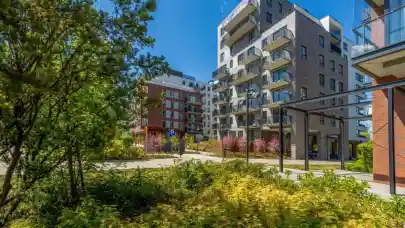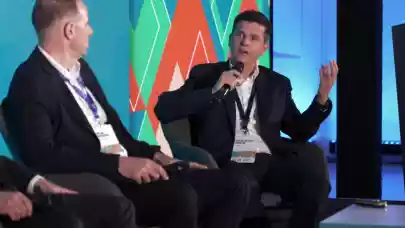
In a video interview recorded at CEE Property Forum in Vienna, Dániel Ódor MRICS, Partner at Taylor Wessing Hungary, shares his expectations for real estate transactions in the year ahead, discusses the balance between international and regional investors in Hungary, and reflects on residential development, PRS, and the regulatory changes shaping the market.
As a transactional advisor, what are your expectations for the next year within the real estate sector?
What I see is that transactional volume is picking up right now, so we are seeing more and more deals coming in. We are also very busy at the moment, working on several different transactions. What I see is that conversion of real estate—such as converting existing offices to residential or hospitality use—is very popular among our clients. Another key trend is land acquisitions, especially plots for residential development, because the Hungarian state has introduced a new equity subsidy programme. This can be a good source for developers to start new residential projects. This is mainly the aim of the whole programme.
International or regional players will be responsible for more deals, looking ahead?
Over the last more than ten years, we have seen a steadily decreasing number of international players in the Hungarian market. We are still lacking international players and international capital. Last year, the only German player that entered the Hungarian market purchased an office building, and we advised on that transaction. Otherwise, we see clients from the region—other CEE countries—who are quite active in Hungary. The main trend, however, is that we work for real estate funds from Hungary and across CEE that are raising money within the region and focusing mainly on mid-sized deals.
How about residential? Is it worth investing in Hungarian plots now that the government has a programme that supports housing?
Developers in Hungary are now looking closely at the programme, and I think it is well established in the sense that financing sources are also available. On the other hand, there are subsidised loans for individual buyers, who are the main target purchasers at the end of these projects. The purchase price is limited per square metre, which I actually find positive, because the aim of the programme is to support housing. I see that many new projects are starting now due to these changes.
There is also a regulatory change that makes it much easier to change the zoning of a project if you apply for it and commit that at least 70% of the flats will be sold under this scheme. This can be very helpful, as we see many industrial areas in good locations for residential development, which developers are now considering. Previously, it was very challenging to change the use of such areas, but with the new regulation, it is much easier. Overall, I am quite positive.
That said, personally, I believe more in the future of the PRS sector. I think the housing problems across the region will accelerate the development of the private rented sector, because for much of the population, buying a flat will simply not be a realistic option. That is why I find it important to develop buildings specifically for rent.
Does the regulation have to be changed?
On the one hand, we see a great deal of freedom in terms of regulation, because the sector is not heavily regulated. On the other hand, this lack of regulation is also an obstacle to development. Those coming from the commercial side often say that the biggest issue is profitability, as yields are difficult to achieve. Compared to Western European markets, yields are almost similar, which raises the question of why institutional capital would invest in this region for such products.
However, I believe that if legislation were changed to support longer-term leases in Hungary or across the region, it could help significantly. It could provide a more realistic living alternative. Currently, rental contracts in Hungary are usually concluded for one year, which I personally believe is a poor compromise between landlords and tenants. Landlords fear non-payment or that tenants will not vacate the property, while tenants cannot truly feel at home in such short-term arrangements.
If tenants could conclude longer-term contracts—three or five years, for example—and if there were state subsidies supporting long-term rentals, these projects would become much more viable. With long-term tenants, proper maintenance, and unified ownership, residential rental assets would become more similar to offices or other real estate classes. At that point, buildings could be valued and sold accordingly. This is precisely why institutional capital is not entering the sector right now—the product, as such, does not yet exist.