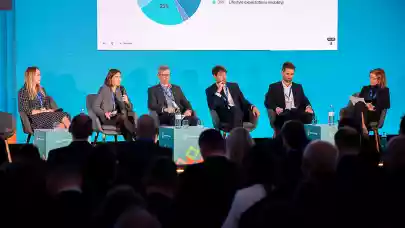
At CEE Property Forum 2025, the panel on urban living examined how cities across Central and Eastern Europe are being reshaped by demographic change, new living formats and rising investor interest. Chaired by Kinga Barchon, Partner and Real Estate Leader at PwC Polska, the discussion navigated the fast-evolving landscape of urban development and the multifaceted opportunities and challenges shaping the years ahead.
Referencing a recent PwC report, Kinga Barchon highlighted: “When five of the year’s top-ten investment classes relate to living, it’s a clear sign urban living has become pivotal in shaping our cities’ futures. This panel is all about exploring the forces and innovations transforming how people experience city life, from young students to senior residents."
Panellist Bálint Botos, Managing Partner at Forestay Group, shared insights on changing investments and the dynamic nature of residential real estate. He explained, “Urban living today is being revolutionised from all sides—demography, technology, and shifting urban lifestyles are converging to create changes at a scale we haven’t witnessed before. Cities like Budapest have seen student numbers double in a decade, yet rental units remain scarce, creating a 'short squeeze' that forces both developers and municipal leaders to reimagine the mix of housing and services offered.”
Representing the SEE region’s largest mixed-use project, Pál Forgács, Managing Director at Emonika, offered a developer's view. “In mid-sized cities, a large-scale mixed-use project isn’t just an option—it’s often the only sustainable route to meeting diverse market needs. You must strike a balance between offices, retail, hospitality, and residential in response to shifting demand, all while navigating the constraints and requirements imposed by master plans and municipal expectations.”
Renata McCabe Kudla, Country Manager of Grupo Lar Poland, focused on the evolving meaning of urban living and the hurdles to attracting new investment. She emphasised, “Urban living 2.0 means more than simply having a place to sleep—it’s about creating environments that offer amenities and foster community through all stages of life. However, slow and inflexible permitting processes are a persistent barrier: for Central and Eastern Europe to become a genuine magnet for institutional investors, city authorities need to streamline approvals and provide clear incentives.”
Representing financial institutions, Danka Morávková, Head of Real Estate Finance at Tatra banka, echoed the challenges of the current market and the necessity for adaptability among lenders and municipalities. “Banks assess mixed-use projects very carefully, especially their location and risk profile, since speculative financing is still viewed with considerable caution. But we’re also evolving—our lending policies are adapting to support the shift from ownership to rental models and encourage developers to pursue creative solutions, provided the business case stands on solid ground.”
For a broader perspective on city governance, Adam Pustelnik, First Deputy Mayor of Łódź, addressed the tensions between institutional ambitions and residents’ practical concerns. “While city officials and investors often prioritise sustainability and innovative urban strategies, these are not always echoed by citizens—sometimes, less than one percent cite green policies as a top concern, showing a disconnect between institutional vision and public sentiment. Ultimately, real estate development is inextricably linked to wider economic and cultural changes; we must balance standing up for long-term values with being responsive to the evolving needs and expectations of our communities.”
The panel concluded by acknowledging the enormous potential for growth within the sector, but also the complexity in aligning investor expectations, municipal requirements, and societal trends. From the persistence of permitting bottlenecks to the gradual institutionalisation of new residential formats such as student accommodation and senior living, the conversation made it clear: the future of CEEn cities hinges on flexible collaboration, integrated thinking, and a willingness to break from old models. As these markets continue to evolve, the willingness of all stakeholders to listen, adapt, and innovate will determine which cities truly thrive