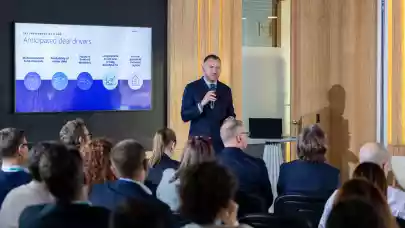
In a video interview recorded at CEE Property Investment Update 2026 in Warsaw, Piotr Mirowski, Senior Partner and Head of Investment Services at Colliers, shares his market outlook for 2026. He outlines the return of liquidity, renewed interest in offices and logistics, shifting capital sources and pricing dynamics.
What dominant investment themes do you expect to be prevalent across investment classes in CEE in 2026?
I expect a significant increase in liquidity across all asset classes. In particular, I see a further revival of the office sector, which has very strong fundamentals and positive supply-and-demand dynamics, combined with a highly constrained development pipeline.
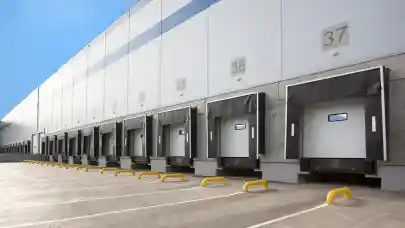
I also expect increased activity in industrial and logistics. This sector has been the backbone of the Polish market over the last four or five years. While last year was slightly disappointing, we are now seeing a return of investors, likely driven by adjusted pricing and a development pipeline that is significantly smaller than in previous years.
When you consider investment pipelines and capital flows, where do you expect capital to be coming from this year?
In terms of risk profile, I expect more core-plus and value-add players to be active. On the long-income side, we are likely to see more core buyers, who have proven over the last 12 months that they can compete on pricing and ticket size and submit very competitive bids.
From a geographical perspective, I expect more capital to come from within Central and Eastern Europe. This capital typically has a different perception of risk and a stronger understanding of local markets. However, the key theme will be domestic capital, both institutional and private. In Poland in particular, the volume of capital deployed by domestic investors doubled last year and has actually quadrupled compared to 2023. I expect this to be a major force in regional real estate investment in 2026.
Why do you expect industrial and logistics to be growth leaders in 2026?
In Poland, we saw around €1.4 billion of industrial and logistics deals in 2025, with a significant amount of supply coming to the market in recent months. The final quarter saw several large transactions closing.
At the same time, supply-and-demand dynamics, similar to those in the office sector, remain positive. This is encouraging investors who had been sitting on the sidelines to look again at Poland. Increased activity in Western Europe is also pushing capital further east, and I expect industrial and logistics to be one of the key sectors in 2026.
What pricing and yield trends do you expect across core and secondary markets in the region?
I do not expect any major yield compression across the main asset classes. Pricing should remain broadly stable, with the possible exception of long-income assets, where selected core buyers have been particularly aggressive and bullish.
For core offices, I do expect some movement in pricing. Secondary markets, however, will generally need to wait their turn.
Finally, how would you describe Polish real estate in three words?
Potential. Growth. Ambition.