Baltic investors are becoming increasingly active in the Polish real estate market, reflecting a search for larger and more liquid investment environments than those available in their home markets. At the same time, pricing expectations, liquidity conditions and asset management opportunities in Estonia, Latvia and Lithuania continue to shape how investors approach expansion and portfolio allocation across the region. Property Forum reports from the Nordic Real Estate Forum 2026, organised in Tallinn.
Patience and operational performance define the next Baltic investment cycle
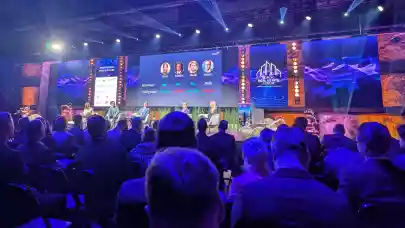
The first panel of the day featured key investors active in the Baltic states and focused on investment strategies in a volatile world.
Kristjan Tamla, Managing Director of EfTEN Capital, stressed that any talk of rising prices in the Baltics must be grounded in a realistic assessment of liquidity. “If you take the view that prices are about to bottom out or even start to rise, then you are simultaneously taking the view that liquidity will improve,” he argued. “Without a meaningful improvement in liquidity, especially for larger transactions, I do not see how prices can sustainably move up, because today the liquidity premium is exactly what the market is pricing in.” Tamla also underscored how wrong the conventional wisdom on retail has proven to be. “It was widely believed that e-commerce would permanently cripple shopping centres, but that has turned out to be a misconception,” he said. “Modern retail centres are increasingly service and experience hubs, and in places like Lithuania we see strong operating performance and very solid prospects for cash‑flow growth.”
Madis Raidma, CEO of East Capital Real Estate, highlighted Core Plus as the most compelling strategy in the current environment. “For us, Core Plus assets still offer a very attractive balance of yield and risk, particularly when you can lock in returns in the 7% range with solid base rents and efficient financing,” he explained. “Higher‑risk, higher‑return plays will certainly emerge once capital flows back more forcefully, but we believe that Core and Core Plus properties will be the first to reprice and show visible recovery.”
From the perspective of Colonna Group, Roberto de Silvestri, Board Member and Investor Relations Manager, sees substantial value in modernisation rather than distressed selling. “In this market, I would not be eager to sell quality assets at a discount; I would focus on upgrading them,” he said. “There is a lot of value still to be created in B+ buildings by making them more flexible, more reusable, and more ESG‑compliant, especially where temporary cash‑flow pressure from vacancy and debt service masks fundamentally strong locations.” De Silvestri also warned that global geopolitical shocks remain underpriced in many investment models. “If energy prices are pushed structurally higher by ongoing conflicts and supply disruptions, inflation and interest rates could move up again,” he cautioned. “If you carry large loan exposures, this is precisely the sort of risk that argues for fixing interest rates or using swaps while they are still reasonably priced.”
Looking ahead to 2026, the panel converged on a few core themes. Liquidity, operational cash flow, and sustainability will increasingly define value, even more than headline yields. “The winners in this cycle will be those who can bridge the gap between buyers and sellers by focusing on real, sustainable cash flow and credible ESG improvements rather than purely on yesterday’s valuations. In a thin and uncertain market, patience, discipline, and thoughtful asset management are themselves a form of competitive advantage”, panel moderator Monika Nedzinskaitė, Head of Transactions for Lithuania, Newsec, summarised.
Poland emerges as a core market for Baltic investors
Another memorable panel focused on Poland as a gateway to Central Europe. The discussion explored misconceptions, risk and return, market structure, financing conditions, and practical advice for new entrants.
Moderator Olga Kozina, Transaction Manager at Zenith Family Office, opened the discussion by highlighting how the narrative around Poland has evolved within just a year. Previously, Baltic investors were mostly asking why they should look at Poland; now, the question is very much how to enter and operate there.
On the question of misconceptions, Adrian Karczewicz, Head of Divestment CEE at Skanska, argued that the traditional classification of Poland as just another Central and Eastern European market is misleading. For him, the data tells a different story. “When you look at transactional volumes across Central Europe, Poland and the Czech Republic account for the overwhelming majority,” said Karczewicz. “Poland increasingly behaves like a self-sustaining, core market rather than a marginal part of a regional basket, and investors who still treat it as a small ‘CEE allocation’ are fundamentally mispricing both its scale and its maturity.”
Kestutis Sasnauskas, CEO of Eastnine AB, reinforced this point by stressing that Poland’s perceived risk is often out of sync with its long-term performance. “Poland is significantly underestimated, and many of the risks associated with the market are exaggerated when you look at the last 20–25 years of development,” noted Sasnauskas. “The country has demonstrated consistent economic progress, institutional strengthening, and real estate evolution, and this long track record should weigh more heavily than outdated stereotypes in investors’ risk models.”
From an owner-operator’s perspective, Nicklas Lindberg, CEO at Echo Investment, explained why they have chosen to concentrate on Poland. “We made a strategic decision to focus on Poland because it is big and diversified enough to support multiple business lines within a single country,” said Lindberg. “What we are seeing now is a growing pool of domestic capital moving into real estate, which is a hallmark of a maturing market and a powerful stabilising force for long-term investment.”
On market dynamics, the panel agreed that the era of purely yield-driven plays is fading, giving way to a focus on rental growth, asset quality, and repositioning. Supply is tightening in key office locations, older stock is being demolished or converted, and modern space is commanding significantly higher rents. This shift is particularly visible in Warsaw, where spreads between central business district rents and other locations remain wide but unsustainable in the long run.
Financing conditions and bank appetite are other indicators of confidence. Thomas Milunovic, Real Estate Project Financing Head of Team CEE/SEE at HYPO NOE Landesbank, emphasised that international lenders are not in Poland by accident. “We have been active in Poland for around two decades because we see a stable economy, diversified asset classes, and steady growth,” said Milunovic. “For us, Poland offers an attractive combination of scale, resilience, and performance across logistics, offices, and retail, and that justifies a long-term financing commitment despite cyclical liquidity fluctuations.”
In closing, the moderator asked what Baltic investors must understand before making their first acquisition in Poland. The advice converged around three themes: treat Poland as a set of distinct regional markets, build a strong local presence rather than managing assets remotely, and prepare for more administrative complexity and transaction costs than in smaller Baltic markets.