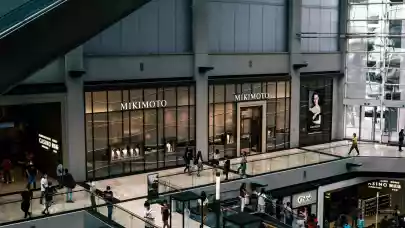
Nearly half of international retail brands are set to expand their physical store networks across CEE, signaling a robust confidence in brick-and-mortar locations despite broader economic shifts, according to the CEE Retail Occupier Survey recently released by CBRE.
The survey maps the current strategies and challenges facing retail chains in the CEE, including the Czech Republic. Participants included international brands across all segments, ranging from clothing and footwear to health and beauty, consumer electronics, and home goods.
The expansion will focus primarily on markets where brands already operate, rather than entering new countries. "Strong domestic demand and falling inflation are supporting consumer confidence and retail sales growth. Customers are price-sensitive and carefully consider their spending, whilst simultaneously showing growing interest in experiential shopping and treating themselves to products they perceive as quality and offering added value," states Jan Janáček, Head of Retail Sector and Retail Leasing Team at CBRE.
Current expansion strategies are focused on retail parks. In the case of shopping centres and high streets, brands prefer established key locations over new, emerging ones. "The retailers' strategy is supported by a new wave of retail space construction, in which retail parks play the main role. In 2025, approximately 800,000 sqm of retail park space was completed in the CEE region, of which 140,000 sqm was in the Czech Republic. Currently, a further 1.1 million sqm of new retail parks is under construction across the region," describes Janáček.
Retailers agree that physical stores remain a central element of their business strategy; however, services such as click-and-collect are essential functionality for them. Physical shops are often the first point of contact where it is possible to truly engage consumers. "After this first personal contact, it is no longer so important where the customer ultimately completes the purchase. Our data shows that whilst online sales may be slightly more environmentally friendly due to a lower carbon footprint, physical stores remain key for generating revenue and creating genuine relationships with customers," explains Janáček.
The share of online sales in total turnover continues to rise; however, the pace of growth has slowed. The Czech Republic and Poland excel in e-commerce, with online sales hovering around 17%. Retail chains are still in the early stages of using artificial intelligence and have so far implemented it only to a limited extent. Currently, AI is used primarily for marketing and customer profiling. "Artificial intelligence has the potential to fundamentally transform the customer experience in physical stores. However, these technologies remain more the exception than the rule for now," explains Miriama Malewská, Deputy Director of Shopping Centre Leasing at CBRE.
According to 45% of respondents, the biggest challenge is financial commitments associated with rising wages and rent. Despite favourable economic statistics, 40% of respondents express concerns about the slow pace of sales growth. At the same time, the labour market remains tight, and a shortage of qualified employees represents another brake on expansion plans. "The growing shortage of workers could become the most serious problem for the entire sector. Without sufficient staff, the ability of chains to expand and maintain competitiveness will be seriously limited," concludes Malewská.