Paraguay is emerging from relative obscurity as a real estate investment destination, supported by investment-grade ratings, demographic growth and significant unmet demand for housing and modern office space. Fernando de Cevallos, President of Green Paraná, tells Property Forum why European investors should take a closer look at the market, where he sees the strongest opportunities and what he has learnt from more than 15 years of investing in the country.
You arrived in Paraguay more than 15 years ago. What made you bet on the country when very few others did?
Honestly, it came down to two things converging. First, the country was completely off the foreign-investment radar — and that was exactly the appeal. When no one is looking, every move is tangible; you're a protagonist, not a spectator arriving late to someone else's story. Second, the more I learned, the more I liked. Its location, in the heart of South America. The pillars its growth was built on. The tax regime. Its recent economic trajectory. A young, favourable demographic pyramid. And above all — above everything else — the sense of freedom you feel there. That's hard to capture in a spreadsheet, but it's real, and for me it was decisive.

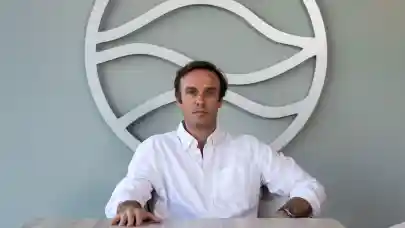
Fernando de Cevallos
President of Green Paraná
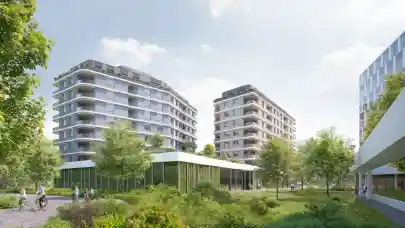
Fernando de Cevallos is president of Green Paraná, the residential arm of a Spanish-Paraguayan development group and one of the pioneers of Paraguay's modern real estate sector. Born in Spain and Paraguayan by adoption, he holds a degree in business administration and an MBA from IESE Business School. He has spent more than 15 years in Paraguay, 13 of them in Ciudad del Este, and divides his life between Spain and Paraguay. Under his leadership, Green Paraná has developed more than 100,000 square metres and helped transform the Km 8 area of Ciudad del Este into what is now known as Ciudad Nueva. Its portfolio includes Arbolia, the city's first residential park; Concept, the largest residential complex in the area; and HU8, the first major corporate project in Ciudad del Este in a decade. The company has offices in Ciudad del Este and Asunción. A European who invested in Paraguay long before it appeared on most investors' radar, De Cevallos represents the link between Europe and one of South America's fastest-growing markets. He will be the keynote speaker at PREIF 2026, the first Paraguay real estate investment forum in Europe, in Vilnius on September 24 and Warsaw on October 1.Throughout your experience in the country, Green Paraná has characterised itself for identifying areas of development before high growth starts. How did you anticipate that growth, and what does that experience tell European investors about where to look for opportunities?
Back then, information on Paraguay was scarce — you couldn't research it from a desk; you had to go and see it for yourself. That's improving every year, but it still isn't fully transparent. So what worked for us was almost old-fashioned: common sense and geography. Paraguay's main cities are shaped by great rivers — Asunción around one core, Ciudad del Este around another — and once you overlay the motorway network, the direction in which a city has to grow becomes almost obvious. Our job was simply to get there first and give that corridor the services, infrastructure, and the quality it was still missing.
The lesson for a European investor is this: you don't need to predict the future; you need to read the map. Growth follows rivers, roads and logic. What we investors add is the decision — we pull those timelines forward, and we shape the place to match our vision instead of waiting for someone else's.
Paraguay offers opportunities across many regions and sectors. Where do you see the most urgent need — and the strongest fundamentals — for an investor today?
There are opportunities right across the country and across every real-estate segment, but the two where we see the most urgent need — and the clearest fundamentals — are residential and offices.
Residential above all. This is a country where 75% of the population is under 35, and which has roughly quadrupled its population over the last half-century. Long-term mortgages have only existed for a short time, so demand in today's age bracket is already enormous — and the deficit for what's coming is even greater. One comparison makes it obvious: Paraguay has seven million people and a housing deficit of around 1.5 million homes; Spain, with almost fifty million, has a deficit of roughly 700,000 — and we call that a serious crisis. That gap isn't a risk to be managed; it's a generation of structural demand.
Offices tell the same story from another angle. Paraguayan companies are growing — many of us in double digits — but the space to house that growth barely exists yet. It's hard to see through a European lens: if there's one thing Europe built over the last forty years, it's offices. Here, it didn't happen. When I arrived, most Paraguayan companies still operated out of a converted family home with a garden. That's changing fast — though not as fast as we tenants would like: today there are waiting lists for modern office space.
Paraguay now holds investment-grade ratings from both Moody's and S&P, has recorded strong foreign direct investment and offers a 10% flat tax with a territorial system. How do these factors translate into confidence and predictability for a real estate investor?
For a real-estate investor, the most valuable thing a country can offer is predictability — and that's exactly what Paraguay gives you. There's something I always say: here, low taxes are a point of national pride. The moment a politician so much as floats raising them, the media and the country's active forces come down on the idea. The result is a system that has barely moved since the early 2000s. You're not betting on what the rules might be in five years — you already know them.
A big part of that is the role of the State itself. In Paraguay, the State's job is to set the rules of the game and provide the infrastructure; the rest of the match is played by the private sector. For an investor, that clarity is priceless.
And two investment-grade ratings in two years? That's no coincidence — it's a reward. A reward for the work done in the past, recognition of the present, and above all a confirmation of what's coming. The market is being validated at exactly the moment it accelerates.
For a European investor, the practical side of buying abroad is often the biggest concern. From your own experience as a foreign investor, how straightforward is the process in Paraguay, and how do ownership rights, residency options and the new Investor Pass work in practice?
I understand the concern completely, because I'm a European investor myself. We carry a mentality where everything begins with bureaucracy — a stack of paperwork before you're even allowed to think. In Paraguay it's the opposite. You don't need anyone's permission to invest. A foreigner buys and owns on exactly the same footing as a local; the right is yours, not a favour granted to you.
If you then want to formalise the relationship, becoming a resident is straightforward — and residency here means holding the permit, not being obliged to live there. There's now a very attractive immediate residency-by-investment route: permanent residency from investments above USD 200,000, together with a path to a Paraguayan passport in around three years. I don't know of anywhere else in the world that offers that combination today.
So the practical side — the part Europeans worry about most — is where Paraguay actually surprises people. You spend your energy on the investment decision, not on fighting an administration.
Much of the new development is concentrated in one segment. Where is the rest of the market focusing, and how does Green Paraná's approach differ?
The market here only really woke up a few years ago, and today you see a strong concentration in Asunción's central business district — small apartments modelled on the modern European or American way of living. That segment will grow, no doubt. But I have the sense — and the numbers to back it — that the great forgotten of this boom is the real Paraguayan. This is a family country: people want to grow up and live in community, outdoors, making the most of the magnificent climate we have. The big developers have largely overlooked that, and that's exactly where we focus. It's the same with offices, where the promise of a quick return blinds many investors to the deeper demand.
And there's one more difference that matters. Here we don't simply deliver square metres; because the existing infrastructure is thin, we take an active part in developing the neighbourhood we move into. For me that's the real contrast with Europe — and I prefer it. I would rather decide and contribute at that stage than pay absurd taxes for infrastructure that's often inflated far beyond what's actually needed. You shape the place, instead of paying for someone else's version of it.
European investors tend to be cautious about emerging markets. What concerns do you hear most often, and how can investors mitigate them through due diligence, the choice of developer and the structure of the investment?
The honest answer is that this is precisely the story of Europe. Today the Union has twenty-seven members, but it began with three, and the rest joined gradually. There was a time when Spain was a developing country with enormous potential. There was a time when the countries of Eastern Europe were, in every sense, emerging markets — and today, thanks to exactly that development, we call them mature. For those of us who were emerging not so long ago, the exercise is simple: picture what our own countries looked like twenty, thirty or forty years ago, and the potential of what is still to be built in Paraguay becomes obvious.
That's what I found here — a place with clear, predictable rules and, crucially, without the European compulsion to bureaucratise and regulate everything, which I think is one of our real afflictions. Caution is healthy, but Europeans tend to weigh everything that could go wrong far more heavily than everything that could go right.
And where you genuinely manage the risk is the same as anywhere: the choice of partner. Work with a developer who is physically on the ground, who has skin in the game, and who builds the neighbourhood — not just the building.
You will be the keynote speaker at the first Paraguay real estate investment forum in Europe, taking place in Vilnius on September 24 and in Warsaw on October 1. What can investors expect from the forum, and what should they take away from it?
What people will find is exactly what I would have wanted to find when Paraguay first entered my priorities. This isn't about standing on a stage reciting macro figures — anyone can look those up. It's about hearing it from the people who actually lived it: what the real potential is, what the genuine challenges are, and how we've navigated them in practice. And, above all, from someone who started exactly where the audience is today — a European investor looking at Paraguay from the outside, with the same questions and the same instinctive caution.
I want to give the honest version — what we set out to do, the obstacles we hit, how we got around them, and where we believe this country is heading. If someone leaves the room with a clearer, more realistic picture of Paraguay than any report could offer — and the confidence that comes from hearing it from a peer who has spent fifteen years doing this on the ground — then the forum will have done its job. It's the conversation I wish I'd been able to have before I started.