Despite global uncertainty and stronger competition from other asset classes, Europe’s real estate market is proving more resilient than many expected. In an interview with Property Forum, Petra Blazkova, Head of Research & Strategy at Catella, argues that structural undersupply, index-linked income and disciplined development are keeping the sector on a solid footing, while investors increasingly shift from broad sector bets to highly selective, asset-level strategies.
How would you describe the state of the European real estate market right now? What are the key indicators you’re looking at?
From a global perspective, I actually think Europe is in quite a good position compared to many other regions. A major reason is that we haven’t significantly oversupplied most markets, which matters a lot in the current environment of relatively high interest rates compared to the past 15 years. In such a setting, income is critical, and European real estate is still generating rents and showing rental growth across much of the continent. If you hold the right assets, which are well-positioned and not over-levered, they continue to produce solid cash flow, and occupiers are generally satisfied. On the capital markets side, interest rates in Europe are still lower than in some other parts of the world, which means debt can be used in a relatively creative way to expand portfolios.
Of course, we can’t ignore global uncertainties, including the recent conflict in the Middle East and the potential impact of higher oil prices and renewed inflationary pressure. But Europe’s widespread use of index-linked leases allows a significant portion of inflation to be passed through to rents, supporting income at the asset level. After the Ukraine conflict, when inflation surged, we saw that much of the rental growth driven by indexation was absorbed by occupiers. So while it is a double-edged sword—with uncertainty and potential for higher inflation—the structural undersupply of the right types of buildings leaves Europe in a relatively better position than many other regions.
We should also acknowledge that real estate is competing with strong performance in bonds and equities, which is challenging. Still, for investors who want a meaningful allocation to real estate, Europe remains a reasonably attractive market. This is particularly evident in residential, which is chronically undersupplied. We also see it in offices, where there is a clear divide between what works and what doesn’t. Large occupiers looking for high-quality, sustainable space in central business districts—cities like London, Paris and Amsterdam—often struggle to find enough suitable product. Retail is also becoming interesting again. After significant repricing, parts of the sector now offer a compelling combination of stable income and potential yield compression, which is one reason we view certain retail markets positively.
You’ve mentioned a lot of growth opportunities. What do you currently see as the most compelling prospects for investors, in terms of both asset classes and locations within Europe?
If you want to be defensive and can hold for the long term, affordable housing is, in my view, one of the most compelling propositions. It gives investors time to absorb capex and to build or reposition assets while being anchored by strong structural demand. Beyond that, we see significant potential in operational real estate, where landlords can play a more active role in driving income. This includes flexible and co-living concepts, senior housing, student housing, self-storage and, to some extent, data centres.
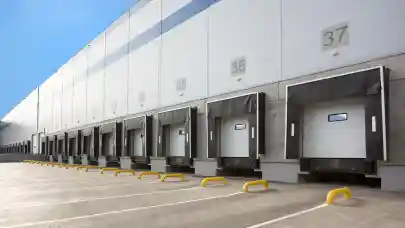
I also have a constructive view on retail, on a selective basis. Because it has repriced so much, certain retail assets now provide an interesting mix of stable rental income and the prospect of some yield compression. Polish retail is a good example: consumer spending is strong, and people still clearly enjoy physical shopping. Logistics is another key theme and, in many ways, an extension of the retail story. Poland again stands out as a growth market for logistics, but we also see attractive opportunities in France, the Netherlands and northern Germany, where additional infrastructure is needed to properly serve demand. Overall, the current environment requires investors to be very selective. Given the uncertainty, everyone is looking for defensiveness, but even within each sector—residential, logistics, retail, offices—you can find specific opportunities at the individual property level. We are moving away from broad, sector-wide strategies and increasingly toward granular, asset-level selection.
Given these trends and opportunities, what is Catella focusing on right now? Where are you seeing increased activity and growth?
We are very much focused on building or acquiring new residential assets in the affordable segment. While we do have exposure ranging from social housing all the way to luxury residential, the strongest demand—both from investors and from future residents—is clearly concentrated in affordable housing. Operational living is another core pillar for us, including student housing, senior living and various flex living and modern living concepts. This is really the “bread and butter” of Catella. Across Europe, we manage around €14 billion in assets under management, and the vast majority of that is in these residential and operational living segments.