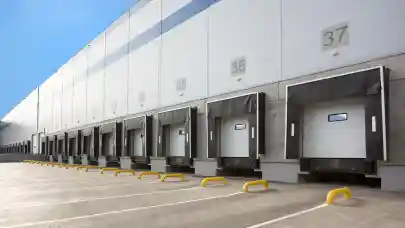
Industrial real estate is no longer just manufacturing and warehouse facilities near highway exits. Growing labour shortages, automated production and pressure for faster urban logistics adaptation are changing companies' expectations for modern industrial parks. Beyond technical specifications, the quality of work environments, transport accessibility for employees and the range of services on offer have become key considerations. There is also growing interest in smaller, multifunctional units combining a showroom, warehouse, offices and operational facilities in one location. This is according to data from Colliers.
"Just a few years ago, companies assessed the quality of an industrial park mainly based on warehouse parameters, transport access for trucks or rent rates. Today, companies also focus much more on the environment the park offers to employees. Modern industrial complexes increasingly take cues from office campuses," notes Jan Kurfürst, an analyst at Colliers. The transformation is also linked to how companies now consider not only product logistics but also the daily commute of their workforce. "More than 57% of employees are willing to commute for a maximum of 30 minutes. This is especially true for younger workers, who place greater emphasis on transport accessibility and work-life balance," says Jitka Kouba, marketing director at Grafton Recruitment / Gi Group.
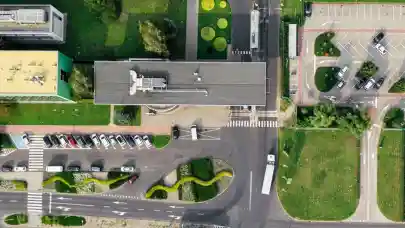
As automation advances, purely manual positions are declining while highly skilled workers — who expect office-like conditions — are increasing. Developers are responding by expanding services within complexes. Modern industrial parks now feature cafeterias, cafés, shops, sports facilities, relaxation areas, daycare centres and even housing. Some projects are gradually transforming into small, self-contained neighbourhoods. "One example is the Urbanity Campus Tachov, where a residential neighbourhood with apartments is planned for the park's tenants," explains Kurfürst. BREEAM and LEED certifications, photovoltaic plants, rainwater management, EV charging infrastructure and more green space have become standard, alongside greater natural light in production and warehouse spaces.
A notable trend has been growing demand for smaller multifunctional units known as Small Business Units (SBUs), typically ranging from 300 to 1,000 sqm, often in broader city centres or accessible urban industrial zones. A typical unit combines a showroom, a small warehouse, offices and operational facilities. Companies in e-commerce, urban logistics, light manufacturing, technical services, retail and the start-up space are the main drivers, needing to be close to customers and able to combine sales, service, storage and administration in one place. Demand for SBUs has nearly doubled over the past two years, rising from just under 20,000 sqm in 2023, though supply remains limited as developers have long focused on larger facilities.
"Developers are responding and recognise that smaller companies can grow over time and later expand within the same location or across a broader portfolio, serving not only as immediate tenants but also as a future source of additional demand," explains Kurfürst.