North East Romania has long been recognised as one of the country's manufacturing centres, but reducing the region's investment story to factories and production lines no longer tells the full picture. Over the past decade, a broader economic ecosystem has begun to emerge, one that combines advanced manufacturing with technology, research, healthcare, logistics and a rapidly evolving business services sector. It is this diversification that is increasingly attracting the attention of investors and will be one of the key themes explored at the inaugural edition of EastGate this September.
The region's transformation reflects a wider trend across Central and Eastern Europe. Investors are no longer searching for locations that excel in just one area. They are looking for places where different industries reinforce one another, where skilled talent is readily available and where businesses can grow within a supportive ecosystem. North East Romania is steadily building exactly that proposition.
Manufacturing remains one of the region's strongest assets, but the sector itself is changing. Labour costs and competitive operating expenses continue to play an important role, yet investors are increasingly focused on higher-value production, automation and supply chain resilience. Romania's national investment framework supports this transition through a broad range of state aid schemes aimed at manufacturing, industrial development and innovation, while regional authorities are working to attract projects that generate long-term economic value rather than simply increasing production capacity.
One of the objectives of EastGate is to broaden this conversation beyond traditional manufacturing. Discussions will focus not only on industrial investment but also on how technology, logistics, education and public policy can strengthen the competitiveness of companies already operating in the region.
Technology is perhaps the clearest example of North East Romania's changing profile. Iași has developed into one of Romania's leading university and innovation centres, producing graduates across engineering, information technology, medicine and the sciences. Together with universities in Bacău and Suceava, the region has built a talent base that continues to attract software companies, engineering firms and business services providers looking to expand beyond Romania's more established technology hubs. Seven public universities and four private institutions now form one of the country's largest higher education networks, creating a steady pipeline of skilled professionals while supporting research and collaboration with industry.
This relationship between academia and business is becoming increasingly important for investors. Access to qualified employees, research partnerships and opportunities for innovation often carry as much weight as operating costs when companies evaluate potential locations. It is no surprise, therefore, that universities and talent development feature prominently in the inaugural EastGate programme, reflecting the growing recognition that human capital is one of the region's greatest competitive advantages.
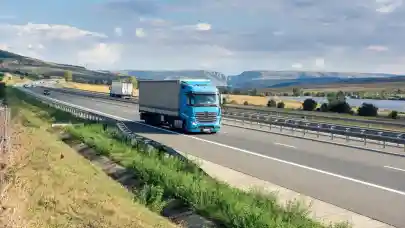
Logistics is another sector undergoing significant change. While North East Romania has historically been viewed as a peripheral market, its location is taking on new strategic importance as companies diversify supply chains and strengthen connections with neighbouring markets. Situated close to the Republic of Moldova and Ukraine, the region is increasingly seen as an important gateway between the European Union and Eastern Europe, particularly as infrastructure investments continue to improve connectivity. These developments are creating new opportunities not only for logistics operators but also for industrial developers, manufacturers and investors seeking locations with long-term strategic relevance.
Healthcare and life sciences also deserve greater attention than they often receive. The presence of the "Grigore T. Popa" University of Medicine and Pharmacy, together with a broader network of research institutions, has helped establish a strong foundation for medical education, healthcare services and life sciences. While the sector may not yet attract the same visibility as manufacturing or IT, it represents another area where the region's knowledge base can support future investment and innovation.
At the same time, agriculture continues to evolve beyond its traditional role. Rather than focusing solely on primary production, the region is increasingly developing opportunities in food processing, agritech and value-added manufacturing, supported by research institutions and access to European funding. This diversification reflects a broader shift taking place across the regional economy, where established sectors are moving steadily up the value chain.
Behind many of these developments is a coordinated effort to create an environment where businesses can invest with confidence. The North-East Regional Development Agency supports investors throughout the investment process, from identifying suitable sites and connecting with suppliers to facilitating access to European funding and building relationships with universities and research centres. This integrated approach recognises that successful investment depends on much more than financial incentives alone.
That philosophy also underpins the launch of EastGate. Rather than focusing on a single sector, the event has been designed to bring together investors, developers, occupiers, entrepreneurs, public authorities and business organisations to examine how different parts of the regional economy can support one another. Manufacturing may remain an important pillar of North East Romania's economy, but the region's future growth will depend just as much on technology, education, infrastructure, logistics and innovation.
This broader perspective is becoming increasingly relevant as investors look beyond short-term opportunities towards long-term competitiveness. Regions capable of combining industrial capacity with skilled talent, research, institutional support and international connectivity are likely to attract the next wave of investment across Central and Eastern Europe. North East Romania is positioning itself as one of those regions, and the inaugural EastGate forum will provide an opportunity to explore not only where the region stands today but where it could be heading over the coming decade.