The office is increasingly a source of competitive advantage for employers — no longer simply a company address. According to Bartosz Oleksak, Associate Director, Office Agency at AXI IMMO, location, building quality and workplace design now directly affect employee comfort, team performance and a company's attractiveness to current and prospective talent.
A well-designed workspace is a strategic tool, not merely an aesthetic choice. It supports concentration, collaboration and productivity while reducing staff turnover. Air quality, natural daylight, acoustics and the presence of natural elements all contribute to employee health and wellbeing. At a time when AI is becoming more widespread, people remain the foundation of every organisation — meaning a workplace that genuinely makes employees' daily lives easier should be viewed as an investment, not a cost. Office location influences both recruitment and employees' willingness to come in. Well-connected buildings near transport hubs expand talent pools and encourage office attendance, while peripheral locations with poor public transport links can hinder team-building. Proximity to restaurants, cafés, retail outlets, fitness centres and social spaces also contributes to how employees perceive a location.
"Social and urban development trends have reshaped the decisions of office property owners, who have moved away from creating traditional office-only districts in favour of mixed-use developments. These vibrant urban environments encourage people to make better use of their time before and after work, enhancing the overall workplace experience. Locations that offer access to dining, retail and leisure facilities can increase employee engagement and help reduce staff turnover," said Bartosz Oleksak of AXI IMMO.
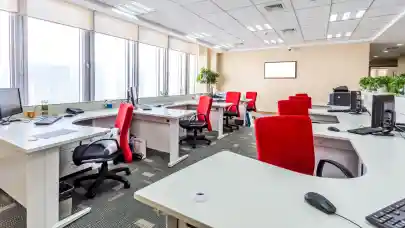
Modern office buildings offer improved air quality, advanced ventilation systems, greater energy efficiency and solutions designed to support wellbeing — all of which can directly improve team performance. Research into green buildings suggests that improvements in workplace quality may be associated with lower absenteeism and higher employee satisfaction. Combined with thoughtful interior design — ergonomic workstations, quiet zones, relaxation areas and acoustic solutions — these features can reduce stress and boost productivity. "Natural light and greenery improve how people perceive a workspace and can increase job satisfaction. A carefully balanced combination of open-plan areas and smaller meeting rooms improves communication and supports both collaboration and focused individual work," Oleksak adds. Office buildings certified under LEED and BREEAM schemes are perceived as more responsible and forward-thinking, while also providing healthier working environments — a signal to jobseekers that a company is committed to sustainable development.
"Office optimisation does not necessarily mean reducing floor space. Increasingly, it is about aligning workspace with the actual working model and reallocating budgets from underutilised sqm to solutions that improve workplace quality and team productivity. A smaller but better-designed office can provide a higher-quality fit-out, improved acoustics, ergonomic workstations, collaboration zones and dedicated wellbeing spaces. In a hybrid working model, the office must offer value that remote work cannot provide: collaboration, meetings, relationship-building and knowledge sharing," Oleksak explains. An attractive location and thoughtfully designed workspace can reduce staff turnover and support recruitment, while an office on the outskirts of a city with poor transport connections may limit access to skilled talent and hinder growth. The office is increasingly moving beyond its role as an operational cost, becoming a strategic contributor to long-term business stability.