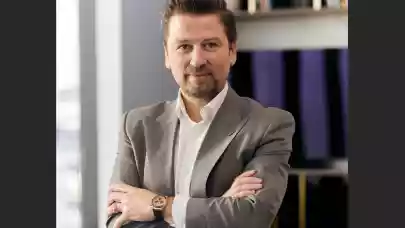
Florentin Avădanei, Founder & Co-CEO at Goldbach Group, talked to Property Forum about the company's strategy of focusing on small urban and rural areas, their consolidation in 2024, and the future of physical retail in Romania.
Goldbach Group has taken a bold step by targeting small urban areas and rural ones with street malls. What inspired this strategic shift, and how do you assess the long-term potential of these regions?
Our retail projects are focused on small urban areas, where there is a real need for quick access to modern retail and a diverse range of offers, just like in large cities. In addition, strip malls in small towns can equally serve the population of nearby rural areas. We are targeting members of small towns and rural communities with this type of project, as these areas show significant potential, confirmed by the data: 44% of Romania’s population lives in rural areas, and 34% of the population is not served by modern retail.
Rural residents should have easy access to the products and services they need, at prices that match their financial capabilities. This is a reality in Romania, and we want to contribute to the development of these regions.
A strip mall can serve tens of thousands of people – the population of a broader zone, a small town and the several communes around it – who may find it difficult to travel to a nearby major city for shopping. Moreover, a strip mall is not just a place for people to stock up on essentials. It can also act as a driver of regional development by creating local jobs.
Goldbach went through a year of consolidation and crystallisation. What were the key milestones that defined this transformation?
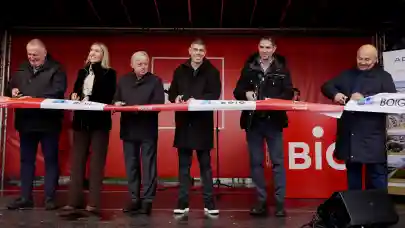
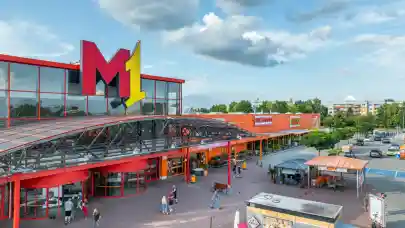
Indeed, 2024 was a year of consolidation for Goldbach Group. When referring to our retail business segment, last year we developed and consolidated our own portfolio of retail parks. We opened in Râșnov, Brașov County, the first retail park under the K2 brand, a shopping gallery fully leased to international retailers. We also acquired eight retail galleries, both food and non-food, located in small and medium-sized towns across Romania. And 2025 started with another important project. We inaugurated the first Lidl store in the K2 Retail Properties portfolio, a project that Goldbach Group not only managed up to the ready-to-build stage but also got involved in the construction phase. This Lidl store is the first stage of the K2 Berceni retail park that we aim to build in Berceni commune, near Bucharest.
This year, we also laid the foundations for a major project in Târgu Mureș, a retail park that K2 Retail Properties will develop in the Maurer Residence neighbourhood. It is a mixed-use project that will include, in addition to retail spaces, an area dedicated to services, featuring a fitness centre, a children’s playground, and a bank branch, alongside the food anchor, a Lidl store already located nearby. And last but not least, till the end of 2025, we will add to our portfolio a new Penny store in Fundeni commune, near Bucharest.
Each of these milestones represents another step toward achieving our goal of reaching 100,000 sqm of shopping mall space operating under the K2 brand by 2030. At the same time, throughout 2024, all the companies within the group developed valuable projects that have strengthened their role in the fields in which they operate.
With the K2 brand expanding rapidly, what differentiates your retail spaces from traditional formats, and how do you ensure tenant satisfaction in these locations?
There are several key aspects we focus on when developing our retail projects under the K2 brand. First of all, accessibility is essential. Easy and quick access to each store is one of the major advantages that modern retail parks have over traditional formats.
We also aim to meet a wide range of customer needs: food, non-food, services, and entertainment. Our retail galleries thus become meeting spaces for community members, something that is especially important for residents of small and medium-sized towns and rural areas, where socialising options are limited.
At the same time, we cannot ignore the fact that, alongside the development of modern retail spaces, we are also witnessing the rapid growth of online commerce. For this reason, our projects include, for example, the necessary infrastructure for picking up or returning products ordered online.
How do you approach site selection in small urban and rural areas, and what demographic or economic indicators guide your investment decisions?
Our decision to invest in small urban and even rural areas is based on the needs of the people living there. The first step is identifying real needs that our retail project can meet within the community. In terms of demographics, we focus on areas where the shopping galleries we build can serve the population of several communes and small towns, a total of 25,000 to 40,000 residents.
From an economic standpoint, we aim for each of our retail projects to function as a vector for the development of the area in which it is located, by creating jobs, improving or developing transport infrastructure, supporting other local businesses, and, of course, contributing to local budgets.
The 10 retail parks in our portfolio have so far generated €120,000 in local taxes. One of our goals is to create a total of 340 jobs by 2027, once the 14 locations currently under development are completed.
Sustainability is becoming a core requirement in real estate. How is Goldbach integrating ESG principles into its development strategy, and what benefits have you observed so far?
We began last year to integrate ESG principles and practices at the group level. In the development of each project, regardless of the field, we consider both the benefits it brings to people and the environment, as well as how that project can hold long-term value from a sustainability perspective.
Specifically, since our portfolio includes companies specialized in construction and design, we rely on their expertise to implement sustainability criteria from the early stages of each project. Over time, this brings the advantage of reduced operational costs. Moreover, developing projects in a responsible manner represents a competitive advantage for the group and strengthens our relationship with local communities.
The group focuses on in-house capabilities, including design. How does this integrated model support your growth and innovation goals?
Although it may seem like a paradox, independence and teamwork are two values that work very well together within the Goldbach Group. On one hand, each of the eight companies in our holding develops on its own path and is self-financing. On the other hand, the competence and expertise of each company are accessible to all the others. This is the business model that works for us and helps us grow both together and separately.
You mentioned the Goldbach Group's design division. This is covered by two companies, K2 Design Lab and Goldbach Design & Build, and both are highly valuable assets at the group level, especially considering that Goldbach also includes companies operating in the construction and retail sectors, areas where modern design and functionality are key elements in any project.
What challenges do you foresee in scaling to 100,000 sqm, and how are you preparing the company to meet those targets?
As we aim to scale our retail park portfolio to 100,000 sqm by 2030, there are naturally several challenges we anticipate, and we are actively preparing for.
One of the key challenges is identifying locations that strike the right balance between commercial potential and unmet local demand, particularly in smaller urban and rural areas. These are markets that are often underserved, but also call for customized retail solutions, so our site selection and feasibility assessments must be extremely precise.
Another challenge is related to pressures in the supply chain and managing construction budgets. To mitigate this, we strongly rely on our in-house capabilities, which give us more control and flexibility in planning, execution, and cost optimization.
Looking ahead, how do you see the role of physical retail evolving in Romania, especially in the context of changing consumer behavior and post-pandemic recovery?
During the pandemic, people shifted heavily toward online shopping, but in the post-pandemic period, the return to physical stores felt like a breath of fresh air, both for consumers and retailers. Today, and in the years to come, I see these two segments continuing to grow and operate in parallel, as each comes with its own set of advantages and limitations. The role of physical retail is not just to provide consumers with the products and services they need for daily life, but also to serve as a space where they can eat, socialize, or enjoy entertainment.
These benefits cannot be offered by online shopping, which, on the other hand, can be done anytime, quickly, from the comfort of your own home. So, from my perspective, physical retail will remain relevant as long as it continues to deliver experiences beyond just shopping.