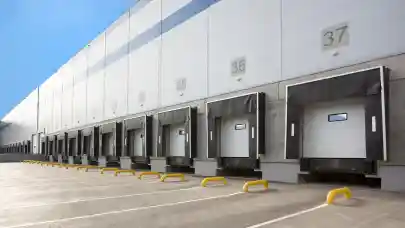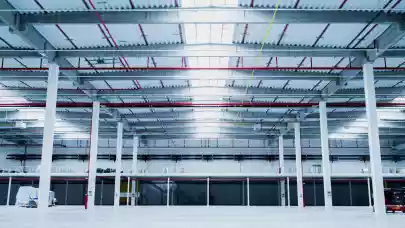
With warehouse and industrial stock of nearly 35 million sqm, Poland’s market has stabilised at a healthy level. In 2024, take-up rose by 4 per cent year-on-year. Meanwhile, development activity slowed significantly, with only 1.75 million sqm under construction in December, down from 2.8 million sqm at the same time in 2023 and from over 4.6 million sqm at its peak in 2021, says Newmark Polska.
“Poland has been one of Europe’s fastest-growing warehouse markets for more than a decade, with both take-up and supply setting new highs each year. The market has now matured and stabilised, which has coincided with the global economic downturn. While Poland may not be competing on volume any more, there are still plenty of challenges lying ahead”, says Jakub Kurek, Head of Industrial and Warehouse, Newmark Polska.
Fewer new leases as regearing accelerates
Despite economic headwinds, Poland’s warehouse market has not stood still. The country has, in recent years, emerged as a major logistics hub in Central and Eastern Europe. Its key strengths include its excellent location in the heart of Europe, robust road infrastructure, large consumer market, and strong GDP growth compared to other European countries.
On the other hand, the market is struggling with international instability and the ongoing armed conflict beyond Poland’s eastern border. “Political stability in both Poland and Europe now plays a more important role than ever in investment decisions. Many multinationals have put decisions on relocation and expansion in Poland on hold in recent years following the outbreak of war in Ukraine. This has had a knock-on effect on warehouse take-up. Although leasing activity surpassed 5.8 million sqm in 2024, marking the third-highest result in the warehouse market’s history, 42 per cent of this total came from renegotiations. By comparison, regearing accounted for just 20-30 per cent of leasing volumes a few years ago. To reverse these proportions and to give developers an impetus to launch more projects, Poland needs to attract more international companies, with those already operating here encouraged to expand,” explains Jakub Kurek.
Low rents, high energy costs
Decision-making processes now take significantly longer than they did a few years ago. However, when it comes to final negotiations, Poland still holds strong advantages. As a developed and mature market, Poland remains competitive in terms of both costs and the quality of manufacturing and warehouse facilities. “After surging in recent years, rental prices have stabilised following a correction at levels satisfactory to both tenants and landlords. In addition, no major hikes are expected this year. Another advantage of Poland’s warehouse market is the young age of its stock – over 70 per cent of its facilities are less than 10 years old and meet the latest technological and environmental standards”, says Jakub Kurek, Head of Industrial and Warehouse, Newmark Polska.
Reasonable and stable occupancy costs attract companies to Poland. However, entrepreneurs are facing rising service charges and high electricity costs. “As a result, the coming years are likely to see an increased emphasis on sustainability and environmental compliance in the warehouse market. In response to rising energy costs and carbon emissions obligations, many companies have, in recent years, turned their focus to alternative energy sources. However, embracing this shift more fully will require significant capital investment and time, but it is well worth the effort. Looking ahead, the growing demand for energy efficiency and the need to comply with stricter environmental standards could be met by warehouses capable of generating and storing renewable energy. This, however, will require a joint effort from both commercial entities and state institutions to upgrade the existing electrical grid and, ultimately, transition away from fossil fuels,” says Jakub Kurek.
Skilled professionals on board
Rising labour costs have recently emerged as another challenge for entrepreneurs. “Higher employee salaries are a natural consequence of a maturing economy. However, to remain competitive across the European continent, companies need to find ways to manage high labour costs and local workforce shortages. A potential solution lies in investing in warehouse automation. New technologies help optimise space, bring down operating costs and improve efficiency,” says Jakub Kurek, Newmark Polska. He explains that warehouses featuring automation systems are able to handle more sophisticated operations such as parcelling, labelling and dividing goods. With the rise of new technologies like AI, robotics or the Internet of Things (IoT), Poland’s warehouses are becoming more innovative and better tailored to contemporary market requirements.
The rapid growth of warehouse technologies would have been impossible without skilled professionals in Poland, particularly in large academic centres. “The labour market is another piece of the warehouse jigsaw puzzle, with Poland no longer competing on low costs and quantity, but quality. Thanks to a strong talent pool - high-skilled professionals who can handle the most complex processes and modern technologies – Poland is emerging as a prime destination for investing in solutions that require high skills and a modern approach”, says Jakub Kurek, Newmark Polska.
Less than one square metre per inhabitant
A notable trend reported by Newmark Polska analysts is the uneven distribution of warehouse space across Poland, highlighting the growth potential of some regions. The average warehouse density in Poland is estimated at 0.92 sqm per inhabitant. Provinces with warehouse densities well above the average include Łódzkie (2.08 sqm), Lubuskie (1.72 sqm), Lower Silesia (1.70 sqm), Silesia (1.33 sqm), Mazovia (1.27 sqm) and Greater Poland (1.04 sqm).
Interestingly, Pomerania and Western Pomerania report 0.74 sqm and 0.76 sqm per inhabitant - rates well below the national average. However, Jakub Kurek assures that these regions, located close to the Baltic Sea, have enormous growth potential and have experienced significant expansion in recent years - despite the economic peaks and troughs. “The warehouse development pipeline in Western Pomerania alone currently stands at nearly 115,000 sqm, the highest total since early 2022. The primary drivers of growth in these regions are substantial investments in wind energy and ongoing improvements to harbour infrastructure. Poland’s seaports, especially those in Gdańsk, Gdynia and Świnoujście, have been setting new freight traffic records for years, successfully competing with their best counterparts across Europe. This, of course, has boosted warehouse demand in Pomerania, as reported by international logistics providers,” says the expert from Newmark Polska. He also notes that this will be a key trend to watch in the warehouse market soon, especially as Poland’s budget has allocated a record PLN 2 billion to maritime economy development this year, nearly a quarter more than last year. Investments include the construction of a container terminal in Świnoujście and the expansion of the seaports in Gdańsk and Gdynia, significantly improving their capacity and driving the growth of international logistics.
Another notable warehouse region in Poland is Kuyavia-Pomerania, which is perceived as a potential support hub for the country’s seaports. With the growing role of intermodal transport, this region stands out as an area of tremendous opportunity as its warehouse density remains low at 0.44 sqm per inhabitant.
“Compared to other European countries, Poland still boasts significant development land availability. Developers are preparing for a resurgence of demand, securing plots in new, attractive locations”, concludes Jakub Kurek.