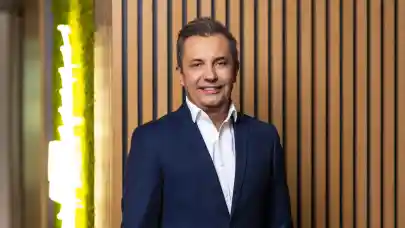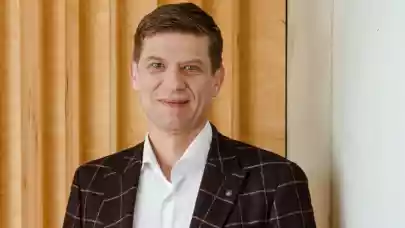
In a video interview recorded at CEE Property Forum 2025 in Vienna, Adrian Karczewicz, Head of Divestments CEE at Skanska, shares his outlook on the office market for the year ahead. He explains why investor focus is shifting from yield compression to rental growth, highlights where supply constraints are strongest, and outlines how exit dynamics are evolving across Central Europe.
What outlook do you have for the region’s office market for 2026?
We are one of the largest developers of office space in Europe, so we see very clearly how trends are changing across the markets. From my perspective, being responsible for sales in Central Europe, there is a visible shift from an acquisition point of view. Many investors previously assumed yield compression over the investment cycle, but this is no longer the main driver, as investors are now much more conservative when it comes to yields tightening further.
Instead, there is a clear shift towards rents. I would say that this new cycle of office real estate investment will be driven by the potential for rental growth. Investors will be looking not only at countries or cities, but also at specific districts and submarkets within cities, where local knowledge allows them to understand where rents are likely to grow the most.
This is happening because there is a significant shortage of new office supply. The market is no longer like it was in previous years, when tenants could easily move between buildings, even across the street. Today, conditions are much more constrained. There is also strong competition from residential developers for land acquisitions, which further limits new office development. As a result, office rents will continue to grow — the key question is where this growth will be strongest.
In what areas do you expect the highest office growth?
From a Central European perspective, I would say that the strongest rental growth potential is in Warsaw’s CBD. I am extremely positive about this trend, as demand for prime, A-class office space remains very strong. Rental levels have already been increasing, but I believe this is a new trend that could last for at least five years.
So definitely the CBD of Warsaw will lead the way. At the same time, if rents in the CBD continue to rise, we will also see growth in locations outside the city centre. I believe a similar pattern will emerge in Prague. Other capital cities where we are active — such as Bucharest and Budapest — will also see this type of growth.
At a later stage, the trend will extend to Polish regional cities such as Kraków, Wrocław and Poznań. This will form the next cycle of rental growth.
What do you expect in terms of the exit of these developments?
It is very interesting to observe these trends from Warsaw. In the early 2000s, we saw American funds such as Heitman, GE Real Estate and others investing mainly in office buildings and some shopping centres in Poland. This was followed by a cycle of German investment around 2004–2005, when large German open-ended funds began deploying capital in Poland, and that cycle lasted for a long time.
Today, many say that German capital is disappearing, which is partly true, with some exceptions. What we see now is the rise of what I call “neighbouring capital”. This includes investors from the Czech Republic, Hungary, Austria, the Baltic states and the Nordic countries — markets geographically close to Central Europe, which do not perceive the region as high risk in the same way that some Asian or US investors might.
Finally, we are also seeing the emergence of Polish capital. This is still developing, but it represents a significant change and will have a meaningful impact on the Central European investment market going forward.