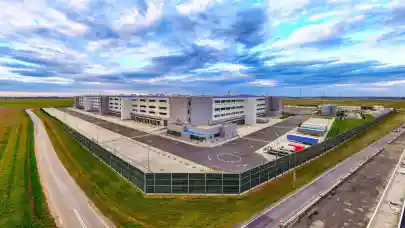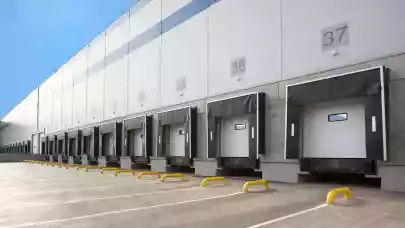
In 2025, Ukraine's warehouse real estate market showed record figures in terms of new space commissioning and fully recovered to its pre-war level. Despite the war, the industry remains the most stable segment of commercial real estate, although experts disagree on the prospects for further development. The URE Club, together with industry experts, investigated what happened in the warehouse market during the year and what factors will determine its development in 2026, in an article for Property Forum.
Record-breaking space commissioning and market recovery
Natalia Sokyrko, Director of the Warehouse and Industrial Real Estate Department at EXPANDIA, CBRE's representative in Ukraine and Moldova, cites the following figures: "For the Kyiv region, 2025 was a record year in terms of the volume of new facilities commissioned. The annual volume of new warehouse space was about 215,000 square metres, which is the highest annual supply since 2008."
According to the expert, as a result, the total competitive supply increased to about 1.56 million square metres (+12% since the beginning of the year), fully recovering to pre-war levels. Most of the newly commissioned facilities entered the market with a high level of pre-leasing, with the majority of the space being absorbed shortly after commissioning.
In addition, as noted by Natalia Sokyrko, 11,000 square metres of warehouse space in the RLC complex, damaged in 2022, was restored and returned to the competitive supply, contributing to the overall restoration of modern logistics infrastructure.
Oleksandr Bondarenko, managing partner of the Investment Programmes Bureau, provides data on the total area commissioned in Ukraine: "Approximately 400,000 square metres of new logistics space was commissioned in 2025. This is mainly in the Kyiv and Lviv regions. These are Class A and B logistics terminals."
Vacancy rates at historically low levels
Despite the entry of new supply into the market, vacancy rates remain extremely low. According to Natalia Sokyrko, in 2025, the vacancy rate in the Kyiv region was 3.5% (-0.3 p.p. since the beginning of the year), reflecting the active absorption of pent-up demand. ‘This decline was mainly due to the timely commissioning of facilities, in particular warehouses in prime locations that were not previously represented on the market,’ explains the expert.
Dmytro Kovalchuk, CEO of the Alterra Group development company, details the situation by region: "Vacancy rates in Kyiv fell to 3% (unchanged until October 2024), which corresponds to pre-war levels and indicates active absorption of deferred demand. The Lviv warehouse real estate market is characterised by a moderate vacancy rate (4.5%) after a period of sharp fluctuations."
Rental rates: stability in hryvnia, decline in dollars
Rental rates show different dynamics depending on the region and currency of settlement. Natalia Sokyrko notes: ‘The effective rental rate for high-quality dry warehouses in the Kyiv region in 2025 remained stable at $5.3/sqm/month (excluding VAT and OPEX), which corresponds to pre-war peak figures.’
Dmytro Kovalchuk provides data for Lviv: ‘In Lviv, class A costs about $6.86/sqm, class B — $6.03/sqm, with the B segment showing positive growth dynamics.’
The expert also draws attention to the currency aspect, saying that compared to 2024, prices have risen by 5% in hryvnia. ‘But relative to the dollar, considering that at the end of 2024 the exchange rate was 40 UAH per dollar, and now it is 43 UAH per dollar, prices in currency have fallen by 3%,’ says Bondarenko.
Record absorption and demand structure
Demand indicators in 2025 broke records. The annual gross absorption volume in the Kyiv region was about 220,000 square metres (+30% y/y), which was the best result in the last decade. The growth in demand was mainly driven by leases in newly commissioned warehouse facilities, reflecting the realisation of pent-up demand for large spaces accumulated in previous years.
According to CBRE data, the wholesale and retail trade segment accounted for 51% of total gross absorption, followed by logistics operators (44%) and pharmaceuticals and medicine (5%). Wholesale and retail companies, mainly e-commerce operators, remained the key driver of demand, as further changes in consumer behaviour and adjustments to business models amid ongoing hostilities accelerated the migration to online sales channels and increased the need for logistics capacity.
The pharmaceutical and medical sector has shown steady growth, supported by the expansion of distributors and pharmacy chains, as well as increased demand for essential goods since 2022. Between 2022 and 2025, this sector accounted for approximately 10%–15% of gross take-up. However, the supply of ready-to-use pharmaceutical warehouses remains limited, prompting tenants to adapt warehouses without controlled temperature conditions in accordance with regulatory and technical requirements.
Adapting to the realities of war
Dmytro Kovalchuk notes an important change in companies' strategies: "There has been a fundamental shift in the strategy for placing warehouse stocks. Companies have begun to split up their stocks: instead of one warehouse of 10,000–20,000 square metres, businesses are looking for, for example, 3–4 facilities of 3,000–5,000 square metres in different regions (Kyiv, Central Ukraine, West). This increases operating costs but guarantees greater business security in the face of military risks."
According to experts, businesses are optimising their inventories to a certain extent and at the same time creating reserve storage sites so that they can quickly restore logistics in the event of damage. It is impossible to guarantee absolute protection of a warehouse from a missile strike today. Therefore, developers and tenants have focused on protecting people and ensuring business continuity, rather than trying to make buildings invulnerable. New warehouse facilities must now have shelters or quick access to them, and staff are regularly trained.
Regarding insurance against military risks, the market is beginning to offer special insurance policies that cover damage from missile strikes, debris, drones, etc. Some large Ukrainian insurance companies already offer such products for commercial real estate, including warehouses and logistics sites, but such policies are not widespread.
Forecasts for 2026
Although experts' forecasts vary somewhat, they are united in their opinion that the market will continue to develop and maintain its status as the most stable segment of commercial real estate.
The level of future supply in the Kyiv region for 2026 remains high and is expected to reach 150,000 square metres, of which 77% will be allocated to the open market and 23% for own use.
In 2026, it is planned to commission about 500,000 square metres of new space throughout Ukraine. This should partially reduce the existing shortage, although a significant part of the facilities may be contracted out at the construction stage.
Among the trends that will dominate the warehouse market, experts highlight that the built-to-suit projects will remain one of the key trends. Companies that clearly understand their operational needs will focus on warehouse construction projects for their own needs. This will give them predictable costs and the possibility of long-term leases, and for developers and investors, it means stable income and reduced risks.
Business relocation continues to be an important factor: companies from the southern and eastern regions continue to move their warehouses and production facilities to safer areas. This creates demand for both temporary solutions and long-term leases. Therefore, in 2026, the most promising solutions are flexible ones, i.e. properties that can be quickly adapted to changes in logistics, multi-temperature warehouses and warehouses in safe locations with developed infrastructure.
The expert also notes the growing role of industrial parks: among these areas are buildings in the industrial park segment. Thanks to tax incentives, manufacturers will seek to combine production facilities with warehouses in one area.
The future of the industry will largely depend on the end of the war, the restoration of macroeconomic stability, and the availability of affordable long-term financing. At the same time, the market continues to adapt to the realities of war by introducing new safety and risk diversification standards, which makes Ukrainian warehouse real estate more resilient to today's challenges.