The development of e-commerce has a growing impact on the development of the industrial real estate sector. The origins can be found in the change of our shopping habits – the popularization of e-commerce has revolutionized logistics operations in warehouses, according to Adrian Semaan, Consultant at the Industrial and Logistics Agency at Cushman & Wakefield Poland.
Global e-commerce remains driven by such factors as consumers’ changing shopping habits, the growth of cross-border retailing and an even easier access to technology. In 2018, the number of customers on the web worldwide was close to 1.8 billion people, and in 2019 it is expected to exceed 1.9 billion. This is almost a quarter of the world population. The total volume of online retail sales is expected to step over $3 trillion in 2019 and the share of e-commerce in total retail sales can grow to 13.7%, while in 2017 it barely exceeded 10%.
In 2018, the Polish e-commerce market was worth more than PLN 51 billion, posting an annual growth of 21%. The penetration rate of online shopping (share of total retail sales) of close to 5% is expected to reach 10% in the next two or three years, according to data by Admitad. By sector, this growth will be posted in the following product categories: fashion and footwear, home appliances, electronics, FMCG, homeware, books, furniture and automotive parts.
E-commerce is the main engine of growth of the Polish warehouse market
The Polish warehouse and logistics market remains strongly driven by the expansion of e-commerce. Its rapid growth has been fuelled in recent years largely by the demand coming from e-retailers. The rise of cross-border retailing is another notable trend in e-commerce. There has been a considerable increase in cross-border deliveries, including orders placed by overseas consumers in Polish online stores and by Polish consumers on overseas websites.
Poland’s strength lies in its central location in Europe, enabling efficient distribution to other countries (Central and Eastern European countries, including the Baltic states, and major Western European markets). Poland also attracts e-retailers to set up central warehouses here with low rental costs – still the lowest in Europe. This has led to a growing demand for logistics space coming from international e-retailers. Leasing activity is particularly strong in western Poland, whose S3 expressway enables seamless shipments to western markets such as Germany and Scandinavia, and - when it is fully built out - to the Czech Republic, Slovakia and Hungary.
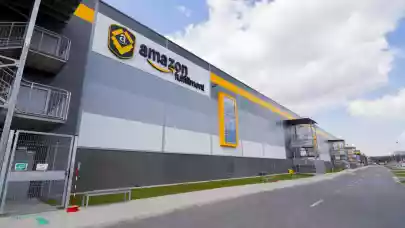
2013, when Amazon signed leases for its first projects in Poland, was a turning point for the Polish market. The world’s biggest online shopping platform already operates several large logistics centres in Poland, including facilities in the vicinity of Wrocław, Poznań, Szczecin, Sosnowiec and Bolesławiec. Given its expansion plans for Poland, the company will soon have eight BTS (build-to-suit) schemes with a total area of nearly 1 million sqm of warehouse space.
Another e-commerce giant Zalando already has nearly 400,000 sqm across three logistics centres: in Głuchów near Łódź, Ameryka near Olsztynek, and in Gardno near Szczecin. Other market players include retailers pursuing omnichannel strategies (Smyk, Vistula Retail Group, KRM, LPP, Leroy Merlin, Decathlon and MediaMarkt Saturn), logistics operators with experience in cooperation with e-commerce (Arvato Bertelsmann, Fiege, Rhenus Logistics, DHL Supply Chain and Spedimex), and CEP (courier, express and parcel) companies such as DHL, DPD, InPost, TNT/FedEx, GLS, and UPS. According to Cushman & Wakefield’s latest report “How to get the hang of e-commerce in warehouses”, warehouse stock dedicated to e-commerce in Poland has already reached nearly 4 million sqm, accounting for 24.5% of the nation’s total stock.
Technical requirements for an e-commerce warehouse
E-commerce reports special requirements for warehouse space and infrastructure. A traditional warehouse with pallet racks is unlikely to meet occupier requirements given the need for quick delivery acceptance and making goods available for sale, swift order picking and the inevitability of large fluctuations in line with seasons, holidays and sales periods. To increase efficiency, warehouses increasingly feature mezzanines with multilayer cardboard shelf racks, mezzanine lifts, conveyor belts sending picked goods to packing zones, etc. A mezzanine enables a more efficient adaptation and optimum adjustment of available space to individual needs and warehouse conditions. Its construction requires an adequately reinforced floor, more efficient ventilation systems and appropriate lighting. Space for regular work in packing and return processing zones must be appropriately lit.
According to legislation, appropriate lighting must be ensured in places where a single person spends more than four hours a day. Buildings featuring order picking zones with additional lighting in excess of the minimum standard of 300 lux are being constructed more and more often. Mezzanines also need to meet stricter firefighting requirements and be equipped, for instance, with additional sprinkler systems. Poland has seen BTO (build-to-own) and BTS (build-to-suit) warehouses delivered onto the market in the last few years. They are tailor-made facilities and are frequently higher than standard schemes, providing additional spaces measuring up to 18 metres in height to accommodate multi-level pick-towers for efficient and integrated processing of many orders at the same time.
“E-commerce reports special requirements for warehouse space and infrastructure – there is no doubt about it. A traditional warehouse with pallet racks is unlikely to meet occupier requirements given the need for quick delivery acceptance and making goods available for sale, swift order picking and the inevitability of large fluctuations in line with seasons, holidays and sales periods,” says Damian Kołata, Associate, Senior Business Development Manager, Cushman & Wakefield.
There are several types of warehouse facilities serving a variety of functions in e-commerce; these include online order fulfilment centres, courier/parcel sorting hubs, urban logistics facilities, return centres and warehouses of foods sold online. The pressure of quick access to end customers and the challenges of the shortest possible delivery times are driving the growth of urban warehouses measuring between a few hundred and several thousand square metres. Such Small Business Units are being developed in Poland’s largest metropolitan areas such as Warsaw, Łódź, Poznań, Wrocław, Gdańsk, Szczecin and Bydgoszcz. They are also good solutions in such locations as Białystok, Częstochowa, Rzeszów and Toruń.
A Small Business Unit can be an excellent place when it comes to quick order collection or return, and can also feature a showroom or even a centre of value-added services such as express small-scale tailoring services for fashion companies, which perfectly fits in with another market trend: personalised production. A city logistics warehouse can also provide an office and a small space for light manufacturing if requested by a client. All key business operations can thus be accommodated in a single location.