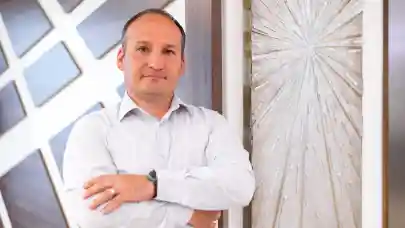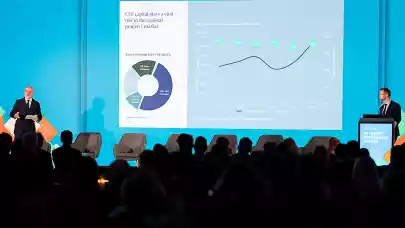
In a video interview recorded at CEE Property Forum 2025 in Vienna, Daniel Bienias, Managing Director CEE and Gábor Borbély, Head of Research CEE at CBRE, share how investors are approaching 2026, why diversification is critical and how regional capital and cross-border integration are redefining the region.
How are CBRE’s partners looking forward to 2026? Does optimism depend on sector or location? What other factors are in play?
Diversification is key for everyone across all regions, including Central and Eastern Europe. If we take retail as an example, during COVID, hardly anyone would have bet on it. Five years later, retail is fully back and arguably stronger and more dynamic than before.
At the moment, sentiment around industrial is somewhat more muted compared to 12 or 18 months ago, when it was clearly the standout sector. But it will return. The region’s strategic position, effectively a bridge between West and East, creates long-term structural potential. New developments in sectors such as electricity, electronics and defence are bringing fresh opportunities and renewed momentum to CEE.
At the same time, we should not forget office, hospitality, business services and other sectors in which we remain very active. One concept worth highlighting is conversion - preserving heritage, upgrading existing architecture and creating innovative new uses. This will be an important theme for the future.
How is CBRE itself looking forward to 2026? Are you planning on expanding your operations?
CBRE is fundamentally about growth. We continuously look at markets and geographies and aim to expand beyond our current footprint.
In practice, this means leveraging our 1,500 professionals across the region, understanding market dynamics in depth and connecting the dots across countries. Our vision is clear: CEE as one country, one team.
Are the investors mostly local or international? Is the weight changing?
The balance is shifting more towards regional investors. As discussed during today’s panels, we are seeing increasing activity from Hungarian and Czech investors, among others. Currently, around 60% of transaction volume is generated by CEE-based capital.
This trend is likely to continue, as regional investors understand the markets well and can capitalise on their asset management expertise.
That said, global players should not be underestimated. Activity from international institutions has been quieter recently, but we expect renewed interest in the coming years. Several external factors will influence this, including geopolitical developments. Once stability improves in the region, particularly regarding the war in Ukraine, we expect to see a stronger wave of international capital returning to CEE.
This intersection of East and West could generate very interesting momentum for the region.