As COVID-19 restrictions are being gradually lifted, many employers are looking for solutions to enable workers to return safely to offices. However, the social distancing rules that are still in place are giving rise to many questions about protocols that should be introduced in the workplace. Savills has launched a special service and published a free guide titled Return to the Office.
“We are returning to offices but they will not be what they used to be. The coronavirus pandemic has changed the way we live and will function in office spaces. Many of these changes should not be seen as temporary. They will transform employees’ and employers’ approach to the work environment forever. A new normality has emerged in which flexibility, productivity and - first and foremost - safety will be paramount,” says Jakub Jędrys, Associate Director, Head of Building & Project Consultancy, Savills.
The key guidance for the workplace is largely in line with the current recommendations of the World Health Organisation and the Polish Chief Sanitary Inspectorate for all other places where contact with another person is likely. Social distancing and strict hygiene regimes must be adhered to. Most protocols recommended by Savills to companies preparing for the return of their employees are based on effective communication of the above rules and office reorganisation that will facilitate adherence to such rules.
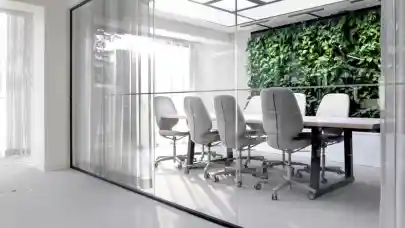
To maintain social distancing in the office, a rotational shift practice could be implemented, with some employees still working remotely. Companies operating on open plan layouts can ensure a 1.5-2 metre gap between employees by disabling some work stations so that neighbouring seats remain empty and employees do not sit opposite one another. Wherever permitted by office infrastructure, partitions could be installed to separate rows of desks.
In the course of the preparation of its guide for tenants, Savills drew on the expertise and insight from building and commercial advisory experts in office leasing and fit-out. The expertise incorporates experiences from Asian countries which have already gone through several stages of coronavirus restrictions lifting, including lessons learned from Savills office in Wuhan which re-opened for business in late March. In addition, the Polish office of Savills discussed the content of the guide with Professor Włodzimierz Gut, a leading Polish virologist.
“No matter whether the coronavirus stays with us for longer or not, companies should guarantee employee safety. Not only will some solutions that we can introduce in the office help us protect ourselves against the spread of the current pandemic, but they can also be used against all epidemics caused by viruses transmitted by airborne droplets,” says Professor Włodzimierz Gut.
According to the guidelines from Professor Włodzimierz Gut, one of the guiding principles that all companies should adopt is an assumption that only people who display no symptoms of COVID-19 can come to the office. Given the doubts about temperature screening of office building users, responsibility for yourself and other people is key. If you feel unwell or suffer from flu-like symptoms, you should absolutely stay at home and refrain from coming into the office.
An office that guarantees to maintain social distancing eliminates the need for wearing a face mask when you are in front of your computer and do not leave your desk, says Professor Włodzimierz Gut. However, to prepare fully for employees returning to the office, it is advisable to conduct an analysis of the utilization of the entire leased space and implement appropriate protocols, and to check safety measures adopted by the owner of a building for common areas.
Wherever permitted by the office layout, it is recommended to create circulation routes promoting one-way traffic and to designate areas that are the most exposed to contact with people from outside of the company, says Savills. In offices visited by many clients, plexiglass shields could be optionally installed to protect reception desk staff. It is also advisable to temporarily exclude breakout zones from use and reduce the number of people accessing a kitchen and meeting rooms. In addition, meetings should be scheduled with breaks for air exchange. It is also reasonable to contact the property manager and ask for policies for the use of lifts, shops and F&B facilities in the building, and to make sure that the frequency of cleaning/disinfection has been increased in common areas.
Hygiene protocols are pivotal in reducing the risk of infection in the office environment. Savills recommends that soap and paper towels be provided in toilets and that employees be encouraged to wash hands. High-touch surfaces such as control panels of photocopiers and coffee machines should be regularly disinfected with products containing at least 60% of alcohol, and the entire office should also be occasionally disinfected using one of the available methods that are safe to office equipment such as ozone fogging. Rotational work stations, particularly hot desks, should be disinfected after each person.
New technologies can also be helpful in planning a safe work environment. Touch-free or voice-enabled solutions to automate processes are recommended in addition to implementing tools enabling remote contact with clients and colleagues such as conference and video calls. Savills also recommends introducing dedicated apps to facilitate shift work management and adjust office occupancy levels.
“The fear of infection combined with a mass of information on the pandemic has given rise to many myths about the coronavirus. In developing protocols for a safe work environment, the focus should be on reliable information and avoiding solutions that may prove unrealistic or unenforceable. Communication with employees should not be neglected. It is worth starting with an employee survey, and all protocols should be clearly explained and supported by signage in the office space,” adds Jakub Jędrys, Savills.
“Companies are now hastily modifying their existing offices, but the coronavirus pandemic is also likely to impact on the type of offices they will be looking for in the future. Without doubt, tenants will begin to focus more on building solutions enabling a touch-free use of washbasin mixers, soap dispensers or light sensors. Some firms may also show an increased interest in going back to cellular office layouts. It is however beyond doubt that tenants will aim at more flexibility, for examples by combining traditional office space letting with the temporary use of coworking space which helps reduce the risks of a long-term lease commitment,” says Jarosław Pilch, Head of Office Agency, Tenant Representation, Savills.
Savills asserts that all the solutions recommended in the guide need to be adjusted to the profile, capabilities and needs of each organisation and the technical conditions of space used and the building itself. With this in mind, Savills has launched a service to assist office tenants in the creation of a bespoke plan of return to the office and adjusting it to the new circumstances to make it a safe experience for employees.