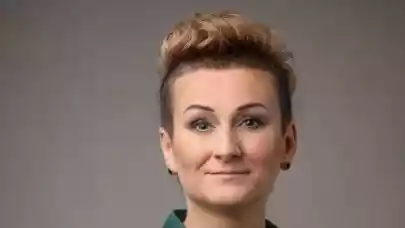
Alicja Kuczera, CEO of the Polish Green Building Council (PLGBC) talked to Property Forum about the impact of the energy crisis on the local property market, the development of a circular economy and environmental awareness in Poland.
The turn of the year is a time for taking stock and planning for the future. What was 2022 like for PLGBC? What have you achieved as an organisation over the past 12 months?
We have seen a tremendous increase in the importance of sustainable construction as a priority solution in the pursuit of climate neutrality and improved health and quality of life. The PLGBC's membership and the reach of our activities continue to expand, which makes us very happy. More and more companies in the construction and real estate industry are looking for support, new knowledge and opportunities for growth based on sustainability.
In 2022, we have, among other things, developed our participation in national and international projects, broadened the scope of our working groups, and produced a number of our own publications and reports, addressing the most important topics for the industry.
We base our initiatives on four strategic pillars: climate change mitigation and adaptation, the circular economy, health and well-being and biodiversity. We have been delighted to see our collective actions permeate the public discourse.
We will, of course, continue these activities as we see the potential for our organisation's activism continues to grow. Based on the ideas of sustainability, in cooperation with our members and project partners, we are influencing the radical transformation of buildings, cities and their surroundings.
Alicja Kuczera
CEO
Polish Green Building Council
It is safe to say that the war in Ukraine and the energy crisis it has caused are, in their own way, useful for our real estate market. Probably never before so many entities have been interested in energy efficiency and the reduction of operating costs...
The building sector is the largest energy consumer on our continent, accounting for 40% of energy consumption. The war in Ukraine has shown how dependent we are on fossil fuels and, above all, how dependent we are on energy. Certainly, the war has contributed to an energy transition in which the need for energy-efficient solutions is already a necessity, based on the standard of sustainable construction.
Energy efficiency first and foremost - it is one of the priorities of the European Union, which has become even more acute in the face of war. Both new and existing buildings must be highly energy efficient. They should have low (even zero) energy requirements thanks to adequate insulation of the envelope, efficient ventilation, cooling and heating systems and energy management. They should also be equipped with energy-generating facilities to make them energy positive.
Today, in the face of the energy, climate and economic crises, these measures are even more important.
In recent years, the European Union has been increasing the pressure on developers when it comes to the circular economy and the recycling of construction and demolition waste. How do you think the industry in Poland is meeting these obligations?
I would absolutely not use the word ‘pressure’ here, as this immediately suggests a negative context. The circular economy is one of the important elements of the European Green Deal, which is why its introduction in every area of economic and social life is crucial. The circular economy in the construction industry has great potential on many levels. First of all, it should be emphasised that in the EU as much as 50% of non-renewable natural resources are absorbed by the construction industry. Therefore, our industry should look for solutions in order to reduce the resource intensity of buildings. And recycling of construction and demolition waste alone is realistically the least ambitious measure here. First of all, we must try to minimise waste generation and use the elements of a demolished building as much as possible in their current form, and only as a last resort - recycle them. This will possible by design for disassembly, i.e. designing a building so that it is constructed from components that are easy to disassemble, reuse and recycle. In this way, a building that has completed its life cycle in its current form can be a source of materials for the next development. However, the most important action in this regard is simply to extend the useful life of buildings, and if a building with a certain function has already lost its 'shelf life', consideration should be given to repurposing it for another function rather than demolishing it.
Is the introduction of so-called material passports on the Polish property market at all possible in the near future?
Material passports are an important element of the circular economy approach. If we want to use building components in the future, we need to know exactly what their properties and characteristics are, which is what the material passport will enable. Its dissemination, in turn, will be the result of the implementation of the circular economy in construction. Realistically, we are at the beginning of this path and circular building projects are for the time being only good and rare examples, but PLGBC is trying to help the construction industry to implement these principles. We are currently executing, together with our sister association from Iceland and the Silesian University of Technology, the CIRCON project, which aims to create a compendium of knowledge and good practices for the implementation of a circular economy in the construction industry and raise awareness in this area.
The lowest classes of environmental certificates (Certified/Silver in the case of LEED or Pass/ Good for BREEAM) - a real certificate of environmental performance or a bit of greenwashing?
Every year we analyse the market for certified buildings in Poland. Our analyses show that under BREEAM, only 15% of buildings have achieved the lowest levels, and under LEED 8%. And it should be noted that these are some of the oldest certifications, so my conclusion is that when the market was 'learning' certification, necessarily projects were scoring lower, and as our market matures in this area, projects are being delivered at the highest levels. Today, in both certification schemes, the highest scores are as high as 35%. By the way, I would like to encourage you to use our database of certified Polish buildings, in which you can find all Polish buildings with multi-criteria certification. We update the database on an ongoing basis in cooperation with the operators of international certification systems.
The level of environmental awareness is much higher among commercial than residential developers in our country. Why do you think this is happening and how can it be changed?
It is precisely thanks to the certification systems that have become most widespread in the commercial real estate sector, which has obviously resulted in a great increase in awareness in this part of the market. In fact, among office buildings, certification has become a requirement - not imposed by regulations, but by the market. Again, let me quote some figures from our analyses: as much as 87% of modern office space in Poland is certified, and in Warsaw, this level reaches 93%. The residential sector, on the other hand, was not interested in certification for years, which has been changing recently. However, for various reasons, large-scale international certification systems have not become widespread, so PLGBC, in order to accelerate the development of sustainable housing, created the Polish multi-criteria certification system ZIELONY DOM (‘Green House’), which perfectly corresponds to the Polish legal requirements and the technical possibilities of our projects. In fact, a similar trend can be observed throughout Europe - while international certification is used for commercial properties in most countries, national, dedicated certification systems are being created for residential construction (for example Ireland, Romania and Italy).
The current crisis in the housing market in Poland will somehow force developers to look for new solutions, which I believe is a great field for spreading sustainable design and certification of Polish flats and houses.