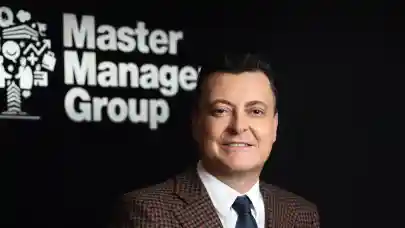
Poland’s retail market continues to offer opportunities beyond the country’s largest metropolitan areas, particularly in regional cities where modern retail supply remains limited and consumer purchasing power is rising. Paul Kuśmierz, CEO of Master Management Group, discusses the potential of hybrid retail formats, changing consumer expectations, investor appetite for Polish retail and the balance between new development and repositioning existing assets. He also outlines MMG’s plans to expand its development and asset management activities across CEE, with a growing focus on regional retail hubs, institutional partnerships and selected mixed-use projects.
This interview was originally published in our POLAND TOP 50 publication, listing the 50 most influential people in Polish real estate.
MMG has recently opened Brama Jury in Zawiercie and launched a major new project in Krosno. What makes regional Polish cities particularly attractive for new retail investment today?
Small- and medium-sized cities across Poland have seen steady growth in purchasing power, rising disposable incomes, and strong consumer confidence, yet they remain under-stored compared to major metropolitan centres. The supply gap in cities like Zawiercie or Krosno presents a clear opportunity to deliver modern retail schemes that capture pent-up local demand. The most important point is that tenants are looking to expand into these cities, understanding that the purchasing power can support these new centres.
Brama Jury combines elements of a traditional shopping centre and a retail park. Do you see hybrid formats becoming a bigger part of the Polish retail market, and what can they offer that conventional schemes cannot?
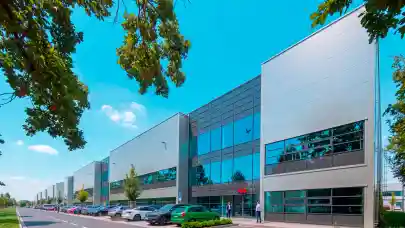
Hybrid developments like Brama Jury bridge the gap between traditional enclosed malls and open-air retail parks. In my opinion, they will continue to capture a growing share of the Polish retail market because they combine the best of both worlds.
- Operational Efficiency: Direct exterior access, lower common area maintenance costs, and fast, surface-level parking typical of retail parks.
- Destination Experience: Enclosed climate-controlled gallerias, dedicated leisure, food and beverage, and entertainment components such as the cinema, restaurants and cafes typical of regional shopping centres.
- Tenant Synergy: Strong anchor tenants (grocery, fashion, services and entertainment benefit from high daily convenience traffic, while lifestyle and leisure units drive longer dwell times and higher basket sizes.
Brama Jury recorded strong footfall in its first months of operation. What do these results tell you about what consumers expect from new retail destinations today?
Strong initial footfall demonstrates that consumers in regional markets expect convenience and comprehensive choices under one roof:
- Omnichannel & Speed: Quick "in-and-out" accessibility for routine daily purchases, click and collect, and routine errands.
- Social & Community Hubs: Modern food courts, entertainment options, and comfortable spaces to gather, filling a vacuum in smaller towns where modern leisure infrastructure is often lacking.
- Modern Merchant Mix: Direct access to national and international tier-1 retail brands locally, eliminating the need to travel to larger neighbouring cities.
MMG has experience both developing its own projects and working with major international investment partners. How attractive is Polish retail to institutional capital today, and what would encourage more investors to return to the sector?
Polish retail real estate is undergoing a structural transition. Historically dominated by Western European and US private equity or institutional funds, the profile of active capital in the Polish market has shifted significantly. Capital from the CEE region (particularly Czech and Baltic funds) and domestic Polish capital account for a major share of retail acquisitions. Institutional Western European core funds remain selective, leaving higher-yielding opportunities to regional players.
MMG believes the retail sector remains fundamentally attractive due to strong macroeconomic fundamentals, high retail sales performance, and index-linked, EUR-denominated leases.
To encourage more investors to return to the sector or attract new investors, we need to continue to see that there is liquidity in the markets and that debt financing is stabilised. One of the issues is pricing, and we need to see a closing of the bid-ask gap between seller valuations and buyer expectations. Institutional capital requires clear, transparent yield discovery that reflects present-day capital costs. We are on a good way of achieving this, and I think you will see more institutional capital coming into the market in the next 12-18 months.
With competition for retail locations increasing, where do you currently see the better opportunities: developing new projects, acquiring existing assets or repositioning older shopping centres?
I think there is value in all of the above; it just depends on the investor and asset management profile. At MMG, we believe better value is currently found in a dual strategy of opportunistic new developments in underserved regional towns and selective repositioning of legacy assets. We just completed a renovation of Galeria Niwa. A first-generation asset built 17 years ago, it holds an irreplaceable city-centre location but suffered from outdated layouts, high energy consumption, and long-standing hypermarket anchor space that was now oversized. We downsized the hypermarket, redesigned the centre, and added a new tenant mix, increasing the fashion mix. A majority of tenants remodelled their shops, and it's now 100% leased and still the dominant centre in the region. There are more centres around the country that need this type of change.
After almost two decades of building MMG in Poland, what is the ambition for the company’s next stage of growth, and how large could the development and investment pipeline become?
Building on two decades of market experience, we plan to basically do what we have always done. The target pipeline focuses on scaling development and asset management operations across CEE, aiming for an active pipeline of 250,000–300,000 sqm GLA over the coming years. The strategy prioritises:
- Accelerating the rollout of hybrid retail projects and convenience parks in regional Polish hubs.
- Expanding JV partnerships with global institutional capital to acquire, reposition, and optimise underperforming retail assets.
- Expanding into selective mixed-use urban developments that blend retail, office, and hospitality.