Almost ten years after becoming the 28th EU member state, Croatia is set to join both the Eurozone and Schengen Area at the beginning of 2023, integrating the country even deeper into the EU. But how will this affect the local real estate market?
As the kuna was firmly pegged since its introduction in 1994, first to the German mark and then to the euro, no significant changes in Croatians’ everyday life are expected, except for the declaration of prices in euros which has already become mandatory. Despite the kuna historically being a very stable and strong currency, Croatians tend to express their significant purchases and costs in euros (apartment and car prices, rents, travel expenses etc.), therefore the introduction of the euro is mostly seen as a “natural cause of events”, without any loud public criticism about losing monetary sovereignty.
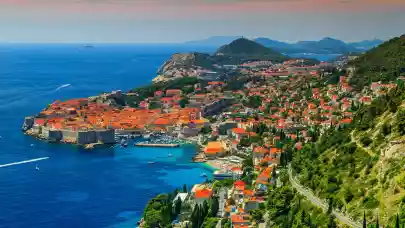
Acceptance into the Schengen Area is expected to boost Croatia’s successful tourism industry further, considering that Croatia remains predominantly a car destination with most tourists during the summer months arriving from nearby EU countries. This means no more border controls and long traffic jams at Croatia’s entry and exit points, turning the Adriatic coast to CEE’s riviera and even potentially “Europe’s Florida”, welcoming retiring Europeans with a mild Mediterranean climate, great accessibility, as well as general safety and low crime rate.
In terms of the expected effects of the upcoming changes on the Croatian real estate market, the media and the public in Croatia are mostly preoccupied with the potential further increase of apartment prices caused by the country becoming even more accessible to foreign buyers with higher purchase power. Strong demand and limited supply, as well as rising construction costs, combined with Croatians’ habit of investing in apartments and saving money in “brick-and-mortar”, have pushed apartment prices upwards in recent years, which have not slowed down even during the height of the coronavirus pandemic. This was most evident in coastal cities and tourist destinations, and especially in the country’s capital, Zagreb, where in the first half of 2022, newly built apartment prices grew by 30.9%, compared to the same period of 2021, averaging at approx. €2,500 /sqm (with 25% VAT), depending on the sources. Nevertheless, demand still surpasses supply, with newly built apartment buildings achieving high presale rates even at the beginning of project construction, while those in premium locations developed by reputable companies boast waiting lists significantly surpassing the number of apartments.
However, a potentially even more interesting question for real estate professionals is whether the euro and Schengen will improve Croatia’s position in eyes of international real estate developers and investors. Although certain real estate asset classes, like office and retail, already have the relevant presence of prominent real estate players from abroad, like GTC, Immofinanz or Supernova, some areas of the real estate market in Croatia are still dominated by local developers, primarily the residential market, despite being very profitable with high returns. This is even more puzzling considering that comparable nearby EU countries like Hungary and Slovenia, as well as Croatia’s non-EU neighbour Serbia, already have a strong presence of international developers on the residential market, with companies from various countries contributing to residential stock in Budapest, Belgrade, Ljubljana, etc. This has traditionally been attributed to the infamous Croatian red tape, earning the county the notorious “ABC” abbreviation among some investors, standing for “Anything But Croatia”.
With the adoption of the common European currency and technically abolishing the borders with the rest of the EU, this could change and at least partially mitigate the flows of Croatia’s investment climate. While it can hardly be expected that international investors will revitalize already passive areas of Croatia, with the exception of maybe those interested in agricultural land and organic farming, it is relatively safe to expect increased interest from international real estate developers for residential projects in major Croatian cities, primarily Zagreb, as well as second-home and touristic projects alongside Croatia’s coast. Although the residential market cannot expect a surge of interest similar to the recent increase of international investors’ interest in the development of logistic centres and parks in Croatia, even the arrival of a few prominent international developers in the Croatian residential market could benefit Croatia’s real estate industry in general, potentially through the introduction of specific real estate classes currently not widely present on the Croatian market, like apartment buildings for rent and privately owned student accommodation. Croatia has one of the highest homeownership rates in the EU (91% in 2020 according to Eurostat) and with increasing apartment prices there is a great potential for providing alternative housing solutions that are already common across the CEE. The same goes for student housing, where students arriving in Zagreb as an academic centre of Croatia have very few options in terms of accommodation, being limited to overcrowded state-owned student dormitories or overpriced privately-owned apartments for rent.
In times of high uncertainty across Europe, somewhat underdeveloped and unchartered real estate markets like Croatia could be an interesting alternative for international real estate developers and investors, considering the strong tourism industry, general safety across the country, political stability and still low interest rates combined with a strong banking sector, aside from the already mentioned benefits of Eurozone and Schengen that further decrease country risk. Despite being a relatively small market with a decreasing population, the listed advantages can enable Croatia in the upcoming years to get rid of the “ABC stigma” and become more interesting for real estate developers and investors.