Savvy hotel operators could harness the remote working trend and adapt their space to deliver a ‘hybrid hospitality’ concept to generate an additional source of income. Colliers International, predicts that where hotels provide office space to enable co-working and interacting, turnover could be increased by up to 20 percent.
In addition, the provision of more flexible workspace in the predicted hybrid hotels trend could deliver an “amenitisation” model, to create greater benefit from and value to the hospitality industry.
Independent ventures including Zoku, which has pioneered this hybrid hospitality-concept, Hoxton/Ennismore, Accor, Ace Hotels, citizenM and Kerten Hospitality focus on the mix of work and overnight stays and have had huge success over the last few years. According to Colliers, many more hotels are going to mix these functions in the future.
Opportunity for hotel operators and institutional investors
"Hotels creating a place not only to sleep and eat but also to rent out space to meet, collaborate, socialise and work is a key way that underperforming areas within the building can be optimised from a revenue and income perspective. You can use hotel space twice while traditional workspace only once. Not only could this concept appeal to institutional investors but I would not be surprised if this becomes a permanent new form of hospitality in the future,” commented Dirk Bakker, Head of Hotels for the EMEA region at Colliers International.
He explained: “However it is important to highlight there are big differences when it comes to the flex office models across the EMEA region. For example in the Netherlands, before the COVID-19 pandemic, around 14 per cent of people worked from home while in Germany this figure was only five per cent. Naturally, the COVID-19 crisis accelerated the flex office trend but the significant cultural differences will remain. This can also be observed in the approach of the hotels themselves. For example, the Hilton hotel in Amsterdam has already implemented the hybrid flexibility concept while the Marriott is still keen to retain its traditional business model.”
More need for flexibility
During economically uncertain times, companies have had to become more flexible by reorganising their space to accommodate varying requirements.
As an example, flexible workspace providers responded to this after the credit crisis by offering companies more room for manoeuvre in their leases, such as shorter terms, compared to traditional real estate owners.
“The Netherlands is now a leader in Europe with the supply of this type of office space,” says Harold Coenders, head of workplace innovation at Colliers International. "Amsterdam and Eindhoven are the flex capitals of the continent supplying six per cent and 5.9 per cent of the total office stock in Europe respectively.
Office for just one day
The business model of flexible workspace providers is to rent out their spaces for five days a week. Leasing space for only one or two days is financially less attractive for these types of companies and is therefore rare in practice.
"More organisations will switch to working from home in the future, supplemented with an office for a few days, or a smaller office, with flexible workplaces elsewhere. Hotels can fill this requirement," said Coenders.
What should hybrid hospitality look like?
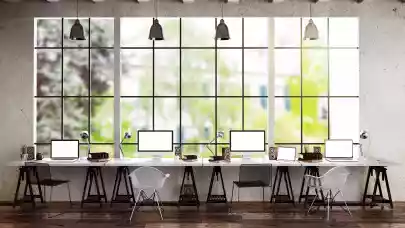
Coenders added: “This does involve adjustments in hotels. Enticing shared workplaces, meeting rooms and co-working spaces are required. Some of the hotel rooms should be made suitable for working, with the bed concealed, so that you can receive visitors.
"This is about offering day-to-day flexibility for renting workplaces, a hospitality first experience with personal and high-quality service and an inspiring and dynamic environment with international allure."
The hybrid hospitality model is also a blend of hospitality towards the workplace, just as flexible workspace providers have been providing a similar offering to the hospitality industry over the past few years.
Sustainability and environmental benefits
The hybrid hospitality model is a way of using space far more efficiently so is a much more sustainable model for the hospitality and office sectors.
From an occupier demand perspective, the rebalancing of the office sector can reduce a company’s carbon footprint due to them having fewer property requirements and less commuting from their employees.
“People are using hybrid hospitality spaces as their satellite or project office. We are also witnessing many self-employed professionals requiring this functionality if they don’t have an ideal place to work from,” added Coenders.
He said: “Hotel spaces can be utilised seven days per week while traditional offices for only five days. Given that 40 per cent of waste comes from real estate and energy use, these figures provide fundaments for this hybrid trend to evolve in the future.”
Better connection with the city and local community
A hybrid hotel offers companies an additional flexible workspace option for their employees without long-term lease obligations or big investments that are required for a large office commitment. This can reduce property costs for companies, as long as this ad-hoc space is only used on a flexible basis, for example in addition to working from home.
“With this mixed-use function, the hotel will become better connected to the city and the neighbourhood. Instead of just serving tourists and business travellers, it will really become part of the local community," said Dirk Bakker.