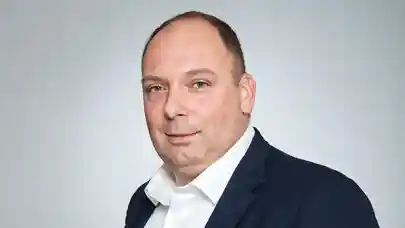
Dr. István Hüse, Real Estate Development Director at Indotek Group, talks to Property Forum about the company's turnaround strategy, the business case for revitalising existing buildings, and why economic, environmental and social value creation increasingly go hand in hand.
What does the turnaround model mean for Indotek Group, and how has it evolved into a core business strategy?
Our turnaround model was originally built on a straightforward investment principle: identifying underperforming real estate assets with untapped potential and transforming them into commercially viable properties. Over time, however, we realised that the value we create goes beyond financial returns.
By revitalising existing buildings, improving their functionality and adapting them to changing market needs, we can generate economic value while also delivering environmental and social benefits. Today, these objectives are closely interconnected in our approach. We see opportunities where others may see obsolete or problematic properties, and our goal is to unlock their potential through active management, repositioning and long-term thinking.

Dr. István Hüse
Real Estate Development Director
Indotek Group
What makes an underperforming property an attractive turnaround opportunity?
The key is identifying the underlying value of an asset that may not be reflected in its current performance. A building might be outdated or no longer suited to its original purpose, but its location, structural characteristics or surrounding infrastructure may still offer considerable potential.
However, acquiring an asset at an attractive price is only the starting point. The real value creation happens afterwards, through active asset management, applying development expertise and the ability to identify the most appropriate future use for each property. This is what distinguishes our turnaround strategy from a purely opportunistic investment approach.
Our approach starts with a thorough assessment of what can be preserved, improved or fundamentally reimagined. We examine market demand, the property's physical characteristics and its potential future uses. Rather than applying a standard solution, we develop a strategy tailored to each asset. Ultimately, successful turnaround is not simply about renovating buildings. It is about understanding how a property can become relevant and competitive again.
How does sustainability fit into a strategy that is fundamentally driven by investment returns?
For us, sustainability and commercial performance are not competing priorities. In many cases, they reinforce each other. Extending the useful life of an existing building can be more resource-efficient than demolition and new construction, while modernisation can significantly improve operational efficiency and reduce long-term costs.
Our investments often include upgrading technical systems, improving energy efficiency and integrating renewable energy solutions where appropriate. These improvements can strengthen the competitiveness of an asset while reducing its environmental footprint. Importantly, sustainability is not something we simply add at the end of a development process. It is increasingly embedded in how we assess opportunities and plan the long-term future of our properties.
Changing the function of an existing building is often part of a turnaround. How do you decide when repositioning is the right approach?
Real estate markets and the needs of occupiers are constantly evolving. A building that was designed for a particular function decades ago may no longer meet current expectations, even if its location and physical structure remain valuable.
We therefore approach each property with an open mind. Sometimes the right solution is to modernise its existing function; in other cases, a more fundamental transformation can create greater value. The decision is always guided by market demand, the characteristics of the property and its relationship with the surrounding urban environment. The objective is to establish a function that is commercially sustainable and relevant to the needs of its future users.
Beyond financial performance, what wider impact can the turnaround model have on cities and local communities?
Revitalising an underutilised property can have a positive impact well beyond the boundaries of the asset itself. Bringing buildings and sites back into active use can support local economic activity, improve the quality of the built environment and contribute to the regeneration of entire neighbourhoods. By introducing new green spaces, community amenities and easily accessible services, such projects can encourage social interaction, reduce the need for daily travel and ultimately enhance the quality of life for local residents.
There is also an important environmental dimension. Preserving and adapting existing structures can reduce construction waste and avoid some of the emissions associated with producing replacement materials, while improvements in energy performance can reduce the environmental impact of buildings throughout their operational life. We believe that responsible real estate investment should consider these broader effects. A successful turnaround should not only create a stronger asset but also contribute positively to the area in which it operates.
Looking ahead, how do you see the role of turnaround strategies evolving in the European real estate market?
I believe the transformation of existing building stock will become an increasingly important part of the European real estate market. Changing occupier expectations, sustainability requirements and the need for more efficient use of resources are all encouraging investors and developers to reconsider the potential of existing assets. Not every building needs to be replaced to meet tomorrow's standards. In many cases, thoughtful repositioning, technical modernisation and a new commercial strategy can provide a viable alternative. For Indotek Group, this is both an investment opportunity and a long-term commitment. Our ambition is to demonstrate that revitalising underperforming real estate can create lasting value for investors, occupiers and communities alike.