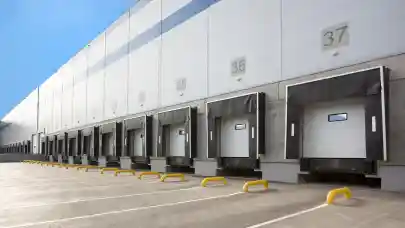
Industrial property vacancy rates across Central Europe are diverging, according to an analysis by investment group ARETE. In the Czech Republic, vacancy stands at 5.3%, though Prague and the Central Bohemian region remain tighter at 4.1%. Poland has seen its vacancy rate fall year-on-year from 8.2% to 6.6%, while Slovakia remains near its peak at 7.99%. In the Czech Republic, net demand in the third quarter held steady at around 250,000 sqm compared with the previous quarter, but was 47% lower year-on-year, while developers started only 149,000 sqm of new projects, with total construction volume down 24% annually.
"Properties that have risen in price by tens of percent in recent years will not necessarily continue at the same pace indefinitely. Particularly in locations where the population is declining and job opportunities are scarce, sustaining further price growth may prove difficult," said Miroslav Barnáš, investment director for real estate at ARETE.
Residential markets are showing similar divergence. Asking prices for flats in Ústí nad Labem rose 16.5% year-on-year in September, in Ostrava by 15.9% and in Jihlava by 15.7%, while Warsaw grew at just 7.3%. ARETE notes that these are asking prices rather than achieved transaction prices. The trend reflects broader pressure on markets where population outflows and limited employment growth undermine the sustainability of price increases.
Capital is concentrating in higher-quality assets. An October survey by Savills found that 81% of investors are targeting assets in the logistics sector, up from 73% the previous year. "The ARETE INDUSTRIAL fund is built on long-term lease relationships. The weighted average unexpired lease term across the portfolio stands at 6.99 years," said Barnáš. "The era of simply building a logistics facility and waiting for a tenant is under growing pressure. In the coming years, what will matter most is asset quality, lease length and strategic location."
Macroeconomic conditions are adding pressure across the region. The Czech National Bank raised its base rate to 3.75% in June, while the yield on ten-year Czech government bonds has exceeded 5.3%. Inflation accelerated to 2.5% in September, driven partly by higher fuel costs, with energy prices also rising. ARETE's analysis concludes that a broad collapse in property values is not expected, but repricing will be selective. "The coming period could be particularly interesting for experienced investors. If property prices adjust to the higher cost of capital, there will be an opportunity to acquire quality logistics assets with long-term tenants at more favourable prices. The key will be not just buying cheaply, but buying correctly," said Barnáš.