Central and Eastern Europe’s real estate market continued to show broad activity and evolving dynamics in the third week of February, with multiple reports highlighting leasing momentum, construction growth, investment transactions and sector diversification.
Industrial and logistics markets remained a major driver of regional real estate. Slovakia’s logistics sector recorded leasing activity up 56 per cent in Q4 2025, marking the strongest quarter in the market’s history, according to CBRE Slovakia’s market report. P3 Logistic Parks extended nearly 10,000 sqm of leases at its Łódź City III facility, underlining solid occupier demand in Poland’s logistics hubs. Czech industrial real estate also continued to expand, with annual demand reaching its third-highest level on record and construction volumes at historic highs, backed by more than €800 million of investor interest. Meanwhile, French investor Inter Gestion Reim entered the Polish market with the acquisition of a warehouse near Słupsk from 7R, reflecting sustained cross-border capital flows into the logistics sector.
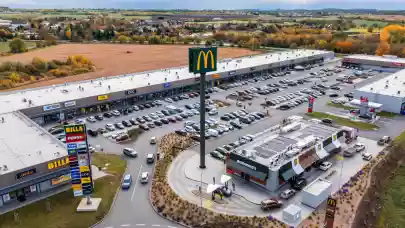
Retail property developments illustrated ongoing investment and tenant activity. GTC secured nearly 31,800 sqm of leases across its shopping centres in Warsaw and Częstochowa, while Realia Fund Sicav added a 14,000 sqm Czech retail park in Kralupy nad Vltavou – Kozomín to its portfolio. At the same time, Romania’s retail stock was highlighted as the second largest in the CEE region despite relatively low density, pointing to continued expansion plans in the Romanian market.
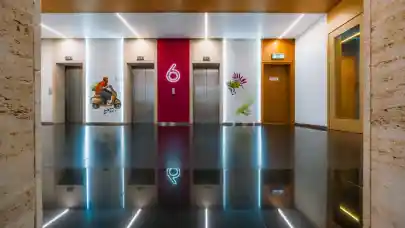
In the office sector, several markets showed signs of adjustment and activity. Poland’s regional office markets posted take-up of 770,000 sqm in 2025, even as new supply dropped to a record low, resulting in the first fall in vacancy rates in years. In Kyiv, office leasing expanded by around 26 per cent in 2025, despite ongoing uncertainty, with gross absorption near 165,000 sqm.
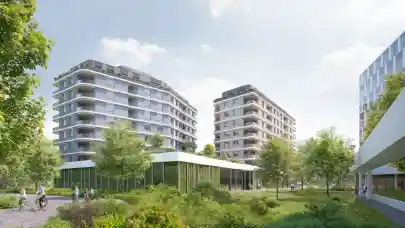
Residential and construction news pointed to strong delivery and sector growth. Romanian builder Speedwell completed and handed over the third residential building within The Ivy complex in northern Bucharest, while Romania’s overall construction volume approached near-record levels in 2025, accounting for roughly 9 per cent of national GDP - significantly above the EU average. Developers such as Prima Development signalled plans to scale residential delivery to around 1,000 units per year in Bucharest and Oradea, illustrating continued housing supply momentum.
The investment climate across the region continued to show resilience and adaptability. Reports noted that Romania’s commercial real estate investment market reached approximately €500 million in 2025, with local investors accounting for around 30 per cent of transaction volume - a strong share that reflects increasing domestic capital participation. However, transaction sizes remained modest on average due to the absence of several large deals. European transaction timelines persisted at around 363 days in 2025, according to Drooms’ real estate trends report.
Taken together, the latest news flow suggests that early 2026 is being shaped less by headline-grabbing mega-deals and more by steady, sector-specific momentum. Logistics remains the clearest growth story, with record or near-record leasing volumes and continued cross-border acquisitions confirming investor conviction in the asset class. Retail activity is concentrated around retail parks and active asset management, with owners securing sizeable lease renewals and selectively expanding portfolios. In offices, the sharp drop in new supply in Poland’s regional cities is beginning to ease vacancy pressure, while markets such as Kyiv are seeing demand driven partly by relocations and flight-to-quality moves. Residential development in Romania continues at scale, supported by strong construction output and ambitious delivery pipelines. At the same time, the growing share of local capital in transactions and new energy infrastructure projects underlines a market that is becoming more domestically anchored and increasingly aligned with sustainability and long-term operational resilience considerations.