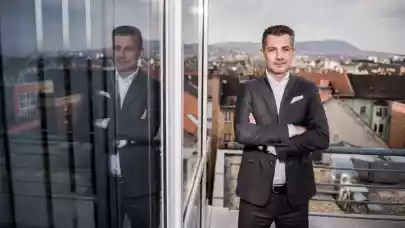
The CEO of TriGranit is still optimistic for 2017 on the Budapest property market, but he expects some kind of correction in the coming years. The question is: will this correction take place in the form of a market stabilisation or will it bring on a significant downturn? Árpád Török talked to Property Forum about TriGranit’s plans for new developments and acquisitions.
Árpád Török will join the senior CEE investor, developer and banker roundtable at CEE Property Forum 2017 in Vienna on 19 September.
It has been almost a year since we last talked. Back then TriGranit had just closed two major sales transactions while getting ready to acquire new assets. What has happened in 2017 so far?
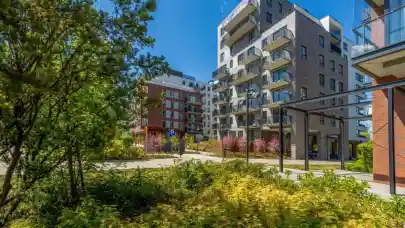
We have predominantly focused on preparing our new developments. We have obtained the construction permit both for Millennium Gardens in Budapest (37,500 sqm GLA) and Lakeside Park II in Bratislava (13,000 sqm GLA) and we would like to start the construction in both cities as soon as possible. Works on Building H (10,000 sqm GLA), the eighth building of Krakow’s Bonarka for Business office park are also ready to be started. We hope that these three projects will start before the end of the year and in Q1 2018 we aim at launching the first phase of our newest development in Katowice, the Silesia Towers located next to Silesia City Center. The first phase will add 20,000 sqm to the Katowice office market, while the whole development will reach around 40,000 sqm GLA. In addition to these four projects comprising 100,000 sqm of leasable office space, we are looking at further development opportunities both in our core countries and beyond them. Over the past years, we have received countless inquires for developments in Poland, Serbia and Bulgaria and we are analysing the opportunity of starting joint projects. We work a lot, we are constantly in motion, but much of what we do cannot be communicated. Many forget that the preparation of a new project or the closing of a transaction takes months and in case of a new acquisition there are non-disclosure agreements in place until the purchase price has been paid. We will close 2017 with three new developments launched and we will most likely finish one acquisition.
In which countries are you looking for development and investment opportunities?
We are mostly looking into Southeastern Europe. We analyse Romania and Bulgaria intensely for both purposes, Serbia can be interesting as a development location.
Last year you said that Serbia had great potential, but there are no possibilities for exit. Have the news of recent transactions in the country changed your mind?
No, my previous opinion stands. I don’t see Serbia as an investment destination for TriGranit, but we are open to development opportunities.
What do you see in Bulgaria?
There are no big movements on the market, at the same time quality assets are being developed. Bulgaria is a, EU-member country with solid economic indicators. There is still some risk of course, but Sofia could be an attractive destination for us.
Only the capital city can be a target for you in Romania as well?
The Romanian market is slightly more complicated than that. Also the secondary cities offer investment opportunities on the retail market, but there is not much space left for new developments.
Have your opinion on Romania and Bulgaria changed over the last twelve months?
With the appearance of core investors, yields have fallen below pre-crisis levels and Central European markets – Poland, Czech Republic and Hungary – have become so expensive, that if you are looking for value-add investment opportunities, you need to look into the SEE region. Our business model has two pillars. On the one hand, we develop and realise our profit by creating added value. On the other hand, we also create added value by letting, managing and expanding acquired assets. Opportunistic investors have very few opportunities left in our region and that is why we started looking into other countries as well. We are, however, not under pressure, we will only make acquisitions, if we find truly great opportunities.
Many investors are under great pressure at the moment. If they don’t purchase new assets they won’t be able to bring the returns they promised.
Exactly. Even though, the Hungarian property market is over 20 years old, lot of people begin to understand only now that there are different types of investors and developers, and they have very different business models. We, for instance, don’t develop speculatively because I personally don’t see the point of launching a multi-million euro project without any leased square meters.
Yields have significantly decreased in Budapest over the last twelve months. The Eiffel Palace office building was sold at a level of 5.4 percent, which would’ve seemed impossible a couple of years ago. What is your projection for the next twelve months?
I don’t think that yields have actually fallen below 6 percent. Besides that one transaction all the others have closed in the area of 6.5-7 percent. One year ago I said that I give the regional market 24 months. There are 12 months left ahead of us and I don’t think that I need to alter my projection: some kind of correction is in order. The question is: will the market freeze with yield levels stabilising or will this correction bring on a significant downturn? Last time the biggest problem was caused by the sudden disappearance of liquidity, prices didn’t rise or fall, instead deals simply stopped getting closed. It is difficult to predict anything, but based on what we are seeing now, the market is healthy. In Hungary and the Czech Republic local players have started to invest heavily, which is a sign of a long-term stability.
In your opinion what is currently biggest risk for regional property markets?
Our head of acquisitions always brings up Kim Jong-un, but what I always ask, is why we need to see danger all the time. The question of low interest rates and how long will they last is important, of course, as increasing interest rates would have an impact on returns.
Getting back to developments, how the labour shortage in construction and the increase in construction costs have impacted TriGranit’s business?
We don’t see costs rising yet, but we do face a shortage of labour in construction. We don’t work with general contractors, we directly negotiate with subcontractors which means, that we can get a better guarantee on quality, prices and deadlines. As we see it, capacity in construction gravitates towards projects that are more certain. Furthermore, there is nothing wrong with costs rising by 15 or 20 percent. The market always balances itself. Yields are compressing, which means that developers can sell their products at higher prices.
Will the increasing construction costs result in higher rents on the Budapest office market?
I don’t agree with those who think that rents will increase just because it costs more to build an office building. The higher the completion, the better position tenants are in and the better deals they can get. If 50 or 100 thousand square metres of new office space are being built in the same location at the same time, I don’t understand why developers find it evident that rents will increase.