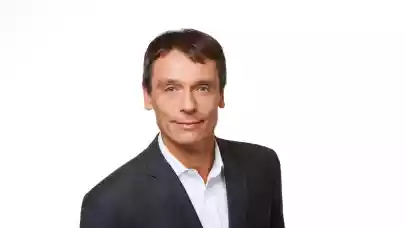
Piotr Szafarz, Partner, Head of Real Estate in Poland and CEE, Dentons talked to Property Forum about the forecasts for the PRS market in Poland, the impact of the war in Ukraine on the European properties and the expected changes in financing conditions.
Piotr Szafarz will be a speaker at our upcoming Living Investment Forum 2022 in Warsaw.
How do you assess the current investment climate in the Polish property market? Which building owners can rub their hands together, and which should already be thinking about repricing their assets?
We would like to believe that Poland is part of Western Europe in terms of its real estate investment climate. But this is not yet totally true. The limited depth and liquidity of its market, local currency issues and the proximity of the war are the deterring factors. So the climate is like in Western Europe, but a little worse. Significant repricing seems inevitable. Financing costs vs. yields is really very simple maths, even for lawyers. Obviously, one may bet that interest rates will fall sooner rather than later.
Those building owners who are not under refinancing pressure will probably hold on to their assets. After all, real estate is one of the best investments now, as it protects its owners against inflation, at least in theory. Others will need to talk to their debt providers and the decisions will depend on the outcome of such discussions.
Funds investing in flats for institutional rental (PRS) in Poland can certainly be satisfied. Would you agree with the statement that they can currently pick through dozens of offers from developers, waiting to see who can offer the lowest price?
PRS is definitely the sector to invest in due to fundamental supply-demand reasons and also because of the new residential habits of young and middle-aged Poles. It will take many years before the institutional residential rental market saturates.
Indeed, we are observing a rapid change in developers’ attitudes to PRS investors. Whereas a year ago it was often difficult for the latter to afford asking prices, today, due to the plummeting sales of apartments, developers are turning to the PRS sector to offload their pending developments.
This sector is not without challenges such as costs of construction (and in particular fit-outs), assumptions as to future rent levels, local currency and, as in any other investment, costs of funding. This segment may also be vulnerable to politically driven changes.

Piotr Szafarz
Partner, Head of Real Estate in Poland and CEE
Dentons
Not all residential developers will get the 'golden ticket' from Western PRS funds. Can we expect consolidation in the industry?
I have seen a few crises in my professional life and my two general conclusions are that a crisis separates the good assets from the not-so-good ones and it catalyses consolidation. It creates opportunities for takeovers at significantly discounted prices. This happened in the past and there is no reason for it not to happen again. The sad truth is that, due to significant repricing, the owners or developers who cannot afford to hold on to their assets will probably have to make a loss.
How would you comment on the government's plans to introduce a special tax for funds investing in PRS on the Vistula?
The concept of a special tax on PRS acquisitions is a typical politically driven idea falling completely wide of any substantive merit. PRS funds always bought and will always buy a little below the prices offered to individuals. This is basic economics – you always get a wholesale discount. So they don’t inflate the prices. What did inflate apartment prices were various governmental aid policies, inflation in general and, most importantly – the supply-demand mechanism.
In the current times, PRS buyers may greatly help developers whose individual sales dropped dramatically. If any sort of tax is introduced, it will be economically passed on to them, at least partially.
What is most striking, though, is the fact that the government does not seem to understand the importance of the PRS sector and the extent to which it responds to the needs of the younger generation that wants to be mobile and flexible. Young people don’t care to own an apartment. They want flexibility in changing the location, size or quality of their flat. And they want the flat to be nicely fitted out, so they don’t have to worry about it. All this is delivered by this new industry. And, hopefully, it will boost residential development, where Poland has major shortages. If I were the decision maker, I would ease this activity, instead of putting more obstacles in its path.
Cadastral tax - will we ever see it in Poland?
I graduated in 1994. My colleague who graduated the same year wrote his thesis about cadastral tax, which was allegedly just around the corner at that time. Not much has changed after 28 years. With age, you become more realistic, not to say sceptical.
I don’t share all of Thomas Piketty’s opinions, but one which I do share is that taxes on assets are more just than taxes on income. So I am generally in favour of introducing a properly designed cadastral tax, provided that the whole tax system would be adjusted. However, we must not forget that this exercise requires creating a huge infrastructure and database, and an army of appraisers. I doubt if any of this will come our way soon.
A de-escalation of the conflict in Ukraine is unfortunately not in sight. In the long term, can the conflict behind our eastern border have a negative impact on the attractiveness of the Polish real estate market among Western investment funds?
We all believed that we were living in a more or less civilized world and no war was likely to break out in Europe again. We assumed that even if we didn’t share all the same values, economic regimes and prosperity would propagate a common denominator. We were wrong and this was a huge shock for many of us and, even more so, for business.
As in any war, the humanitarian aspect is the most important. But this war also added to the already existing economic problems, such as disrupted supply chains or rising energy prices. Now, the nuclear threat and, consequently, global escalation of the conflict, however unlikely all this appears, is in the back of everybody’s mind.
Having said all this, businesspeople will factor (or have already factored) the war and related risks into their decisions. I hope the war will end soon, but if it doesn’t and provided there is no escalation (and there is no reliable business modelling if there is escalation), it will not prevent business from continuing. In other words, I think businesses will soon come to realize that the geographical proximity of the war does not create any more real risks. We are a NATO country and an over-spill into any NATO country is not only inconceivable but would also mean big and unpredictable trouble for global markets, not just for Poland.
Do you expect any changes in financing conditions in the nearest future?
We have a few problems with financing conditions at present. Firstly, the cost of funding and it’s not just that the rates are high; what’s more important is that we are not sure when and at which level they will stabilize. Secondly, LTV/LTC levels go down. Thirdly, the banks are very selective about the assets, sectors, geographies etc. Fourthly, the cost of hedging (both interest rates and currencies) is rising. Fifthly, worries about upcoming maturities and refinancing are stalking the market. And further miscellaneous concerns are likely to arise in the course of events.
According to all sources, the situation here is likely to get worse before it stabilizes and then starts getting better. I hope that we will see stabilization in Q2 2023. This will tell us how exactly the prices should adjust so the market can restart with more or less the same appetite as in 2021.