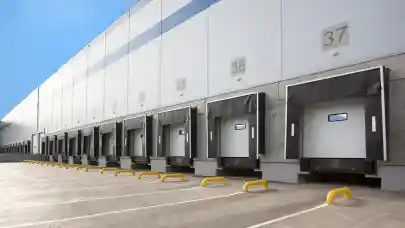
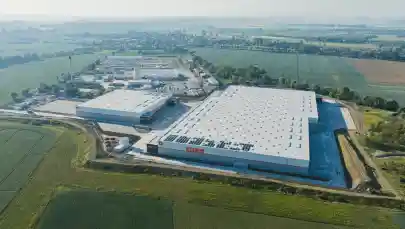
Ukraine’s logistics real estate segment has suffered significant losses and destruction since the beginning of the full-scale invasion. Russia targeted warehouses and about 500 thousand square meters of warehouse space was destroyed during the attack on the capital in the Kyiv region. Iryna Nastych summarised the situation in an article prepared by the Ukrainian Real Estate Club for Property Forum.
"In 2022, the professional warehouse real estate market in Ukraine underwent the most significant changes in the last 20 years, that is, since the very beginning of the segment in the early 2000s," says Pavlo Makukha, commercial real estate expert, founder of BRIDGY. The end of February marked the most difficult period for all market players, as Pavlo Makukha characterized it, it was a time of great uncertainty.
"The first months of the full-scale invasion were marked by a decrease in the volume of storage needs for almost all users. A sharp drop in sales, lower business profitability, occupation of some territories and destruction of sales outlets and distribution centres forced tenants to cut costs, including rent. So, in general, the demand for warehouse space remained limited, and there was uncertainty among tenants," comments Natalia Sokyrko, Head of Warehouse and Logistics at CBRE Ukraine.
According to the data provided by Mr Arbuzov, almost 30% of the total amount of warehouse space in the Kyiv region was lost, which is more than 450 thousand square meters, and about 80 thousand square meters were damaged. On the other hand, in the safer western regions, the demand for warehousing space has increased, which led to a shortage of warehouses in March-April and an increase in rental prices.
The next period is the first months after the de-occupation of the Kyiv region. And although, given the large losses, one could have predicted a return of demand after the de-occupation, this did not happen. Some of the players rethought and revised their business model, started trading on wheels, without storage, and some rented warehouses in the west of the country. Storage in the Kyiv region decreased, warehouses began to be vacated, and vacancy rates began to rise. Despite the changes in business models, the demand for warehouses still increased slightly.
"The leasing activity was mainly represented by companies being forced to move from destroyed warehouses to new or existing warehouses. At the same time, demand for warehouses as places for storing and sorting humanitarian aid from abroad was growing," comments Natalia Sokyrko.
In May and July, there were attempts to realize the reality. "Businesses began to study market changes and make short-term plans for the near future. Some players from the Kyiv region returned. Many businesses have begun to rebuild the destroyed premises," says Pavlo Makukha.
If we summarize the summer-autumn period, it can be called the stage of forced rent. "Business owners were thinking about whether to close their business altogether or continue to operate, but with a lower turnover," explains Fedir Arbuzov, "In 2022, we counted a total of 150 thousand square meters of transactions in the Kyiv region, of which we closed 22 thousand square meters on our own, representing the interests of developers and tenants. The demand we expected did not materialize. This forced demand continued until December."
According to Natalia Sokyrko, in general, in the second half of 2022, demand for warehouse space was somewhat more active but continued the trend of the first half of the year, where rental activity was driven mainly by the rotation of existing companies from damaged warehouses, as well as by companies migrating from the eastern regions of Ukraine or returning to Kyiv from the western part of the country. "As a result, annual leasing activity in the Kyiv market amounted to about 144,000 sqm, which is 16% less than in 2021. And the main tenants of warehouse space were companies from the wholesale and retail segments, as well as 3PL and transport operators," the expert notes.
Despite the massive rocket attacks and planned and emergency power outages, the logistics market managed to adapt to the current reality and carry out operations.
Regional redistribution
Last year was a year of relocations and regional redistribution, with businesses forced to look for alternative safe locations and rescue their goods from the war zones. This had a corresponding impact on demand and rental rates in relatively safe and dangerous regions.
"Most logistics companies from the east and south were forced to relocate to the central and western regions of Ukraine. This significantly reduced the demand for warehouses in the eastern, central and southern regions. "The vacancy rate there has risen sharply," comments Pavlo Makukha, "Following the relocation of companies, the demand for industrial and warehouse space has moved to safer areas. Tenants partially reoriented to warehouses located closer to Europe. Logistics property was also needed to store and sort humanitarian aid from abroad. As a result, a very powerful logistics hub has emerged in the Lviv region. However, even after the shift in emphasis and significant destruction, the capital's warehouse logistics hub remains the main one.
In the first half of 2022, such regions of Ukraine as Vinnytsia, Khmelnytskyi, Ternopil and others were in demand, but the supply of space in these locations was very limited both in terms of quantity and quality. Demand was high in Lviv and the Lviv region, where the search for vacant properties began immediately after the start of hostilities on February 24. Vinnytsia, Ivano-Frankivsk, Ternopil, Chernivtsi and other regions were among the most popular destinations for relocation. Tenants were looking for warehouses and industrial facilities primarily in the western regions, where there was a high-quality competitive offer, infrastructure for relocation, prices were in line with the quality of the property, and local authorities encouraged and incentivized tenants to relocate.
In terms of location and infrastructure, Lviv, Zakarpattia and Volyn regions bordering the western border of Ukraine were the leaders in the location of logistics hubs for the storage and sorting of foreign humanitarian aid.
Relocation of businesses, closure of sea and air traffic, and the insecurity of some railways and roads near the front line also led to changes in logistics chains.
"In the first months of the full-scale invasion, retailers and market players were looking for new approaches and ways to quickly deliver goods directly to retail outlets, optimizing their number, as many of them were closed due to the hostilities in Ukraine," says Sokyrko. "Warehouses near the western border of the country and a joint warehouse in Poland, the General Staff of the Armed Forces of Ukraine and Ukrainian market players such as Rozetka, Fozzy Group, TIS, Dragon Capital, Nova Poshta, Ukrposhta were opened. The goal of the project was to speed up the delivery of humanitarian aid and essential goods to Ukrainians. Later, the logistics chains began to establish themselves, and the market coped with the load of the first months of hostilities."
"The threat and complete closure of Ukraine's sea gates led to a reorientation to using the ports of neighbouring Poland (Gdansk) and Romania (Constanta), from where the products are delivered to our country by rail and road. We reduced our inventory and distributed it to regional warehouses to minimize the risk of loss of property," comments Oleksiy Shestak.
Demand structure
The structure of demand remained almost unchanged compared to the pre-war period, but some trends have significantly intensified. The main tenants are logistics operators, pharmaceutical companies and retail chains. Refrigeration and freezing space remains the most sought-after space. Since several modern complexes with high-quality temperature storage conditions were completely destroyed, there is a significant shortage in this segment.
Demand is steadily growing for medium-sized dry warehouses (up to 1,500 sqm) and those that can be modernized to suit the tenant's business or that can cover the needs for warehouse, retail or industrial space in one location. There is also an increase in demand for turnkey contract construction to minimize and distribute project risks between the customer and the developer. Landlords are also trying to increase the serviceability of their offer and offer pallet racking systems and loading equipment for rent."
Rental rates and vacancy
Prior to the full-scale war, Kyiv, Lviv, Kharkiv, Odesa and Dnipro regions were leading in terms of the highest rental prices for logistics property, according to Pavlo Makukha. "After the invasion, prices fell in all regions except the western ones. Rental rates for Class A warehouses in Kyiv region reached $6 per square meter per month in early 2022. From March to July-August, there was no such thing as market rent. Each case was considered separately. But by the end of 2022, landlords were offering vacant Class A logistics property for $5 per square meter per month," the expert says. "In Lviv, demand increased sharply in April and May, which led to rental rates rising to $10 per square meter per month. Before the war, vacant space was offered for $6-7. However, the ultra-high prices did not last long. Today, rents in the western region are gradually returning to pre-war levels."
Even before the war, Ukrainian businesses had learned to respond flexibly to non-standard situations, to negotiate and make concessions. This approach was widely used in 2022 as well. "Many landlords offered tenants short-term discounts and flexible lease terms. Among the most common forms of rent reduction were rent deferral, discounts of up to 50% and rent reduction. However, as the market adapted and tenants returned to the Kyiv region, the flexibility of the terms offered decreased," comments Natalia Sokyrko.
As for the vacancy rate, at the end of 2022, the vacancy rate in the Greater Kyiv area was 7%, as opposed to 2% at the beginning of the same year. This is 112 thousand square meters of vacant class A and B warehouse space. Lviv warehouses are now full, and there is not even enough space.
New offer
Despite the extremely difficult situation in the country, the professional logistics real estate market was replenished with a new supply in 2022. The new supply took place entirely in 2H 2022 and consisted of approximately 45,000 sqm of warehouse space, including RLC Logistics Center II (GLA 24,000 sqm) and two phases of the warehouse complex in Makariv (Phase 3 - 10,200 sqm; Phase 4 - 11,300 sqm). Thus, the total speculative supply increased to 1.41 million sqm as of the end of 2022.
In Lviv, the first phase of the Sparrow Park Lviv industrial park was completed and opened. This is a modern Class A industrial and warehouse complex with an area of almost 12 thousand square meters. The construction of new facilities within the framework of such promising projects continues in the same region: Sparrow Park Lviv and M10 Lviv Industrial Park. Also in 2022, Alterra Group commissioned all phases of the 48,000 sqm PORT Logistics Center in Lviv.
Forecasts
Further development will depend on the situation on the frontline, with the success of the Ukrainian Armed Forces, the market will have huge growth prospects. Nevertheless, in 2023, about 110,000 sqm of new warehouse space is expected to be commissioned, of which only 32% is competitive for the leasing market Therefore, the shortage of new supply is likely to persist in the medium term, as uncertainty over the duration of the war, shortage of construction materials and labour migration, which were common in 2022, will continue to influence long-term decisions of developers.
In addition, the demand for warehousing space from major players may gradually shift from leasing to the construction of owner-occupied warehouses and full utilization of the premises by their owners. Looking ahead, we can assume that the lack of large modern space for speculative purposes is likely to become more acute in the future as the economy recovers and the country rebuilds.
The total vacancy in the Greater Kyiv area as of the end of 2023 is expected to gradually decrease and should not exceed 5-6%. The overall development of warehousing property will be mostly suspended, but those projects with a high degree of readiness may be completed in late 2023 - early 2024. As early as 2024, the vast majority of logistics facilities whose construction was frozen during martial law are likely to be completed and put into operation.