Poland's logistics market is holding steady on demand but growing more selective, with Chinese occupiers, manufacturing uses and regional hubs like Łódź reshaping the picture. We spoke with Jarosław Czechowicz, Country Manager Poland at Marq Logistics, about shifting occupier demand, new projects, regional growth potential, and what the Ares Management ownership means for Marq's strategy in Poland.
This interview was originally published in our POLAND TOP 50 publication, listing the 50 most influential people in Polish real estate.
Marq Logistics has recorded strong leasing activity in Poland this year despite a more selective market. Which types of occupiers are currently behind the strongest demand, and how are their requirements changing?
The overall demand structure has not changed dramatically. We continue to see activity from the occupier groups that have traditionally driven the Polish logistics market, including retailers, third-party logistics providers and distribution businesses. What is particularly visible this year, however, is the level of activity from Chinese companies. They are looking more closely at establishing operations in Europe, in part because of regulatory changes that encourage them to locate closer to European customers and supply chains.
Poland is well positioned to benefit from that interest. Its central location, transport infrastructure and access to the wider European market make it an attractive entry point. These occupiers often approach decisions from a long-term goals perspective, focusing on connectivity, speed to market, suitable space and future expansion. Established retail and 3PL customers also remain active and increasingly selective. The market is competitive, but well-located, high-quality assets continue to attract demand.
A new manufacturing facility for photovoltaic inverters and battery energy storage systems is planned at Marq Logistics Wrocław V. Are you seeing a broader shift from traditional warehousing towards manufacturing and high-tech production within logistics parks?
We would describe this as an evolution rather than a complete shift. We think that the balance between logistics, manufacturing and other industrial uses depends heavily on location. In markets such as Silesia and Lower Silesia, production has always been an important part of demand. These regions have strong industrial traditions and very good connections with Germany and other European markets.
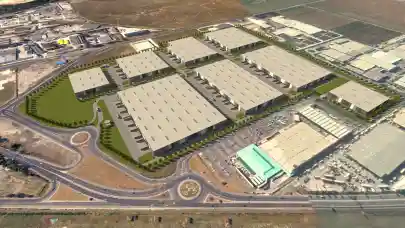
What we see changing is the range of production activities in modern logistics parks. We are seeing requirements linked to advanced products, the energy transition and sophisticated supply chains. Our new facility at Marq Logistics Wrocław V is a good example, combining manufacturing with the logistics needed to serve European markets. Not every location will be suitable. Power availability, technical specifications, planning conditions, labour and transport connections all matter. Where these elements come together, logistics parks can support a broader mix of activities than traditional storage alone.
Recent leasing activity in locations such as Lublin and Łódź shows demand beyond Poland’s largest logistics hubs. Which regional markets do you believe currently have the greatest potential for further growth?
The largest and most established markets remain our main focus: Warsaw, Silesia, Lower Silesia and Poznań. They offer the depth of demand, infrastructure and labour pools that larger businesses require.
Additionally, Łódź has always been one of Poland’s key logistics markets, but it is becoming particularly interesting for Chinese customers evaluating locations from a European or global perspective. One advantage is its competitive rental level compared with other major logistics markets in Poland. For an international occupier assessing the total cost and reach of a European operation, that can be meaningful. Łódź also offers a central location and strong road connections. In 2026, vacancy has fallen by roughly half, showing that available space is being absorbed and the market is tightening.
We also see activity in regional locations such as Lublin, where the right asset can respond to a clear local or eastern Poland requirement. In our view, these markets need to be assessed individually, as demand can be more specific than in the largest hubs. We therefore follow occupiers, infrastructure and sustainable long-term demand rather than pursue growth simply because a location is less established.
With a portfolio of over 2.0 million sqm in Poland, how do you assess the role of new development versus existing assets in today’s market?
Our view is that existing assets and development both play important roles within the platform. Under present market conditions, we see significant opportunities to support customers through our existing portfolio, particularly in locations where we understand the occupier base and see durable demand.
That does not mean we have moved away from development. We maintain our landbank, monitor conditions and assess customer requirements, giving us the flexibility to build when the fundamentals support it. The key is maintaining the flexibility to meet customer needs through a combination of high-quality existing assets and future development opportunities.
Marq Logistics is now part of Ares Management. Does being a part of this much larger international manager change your activity in Poland?
Marq Logistics’ greatest strength is that it brings together local logistics expertise and operating capabilities across the globe under one brand, while benefiting from the resources of Ares as the investment manager. Ares’ scale and experience support opportunity identification, capital deployment, and relationships globally, while Marq Logistics focuses on operations and management at the asset and customer level. Ares operates across markets and industries, so Marq Logistics benefits from global insight and expertise.
Marq Logistics has a clear role: we are focused on delivering consistent, best-in-class solutions to our tenants in Poland and across the globe as a landlord of choice. In Poland, our activity remains grounded in local market knowledge, customer relationships and disciplined management of each asset.
Looking at your pipeline and conversations with occupiers today, what do you expect to be the biggest sources of growth for Marq Logistics in Poland over the next two to three years?
We see continued opportunity across Poland’s largest logistics markets, including Warsaw, Silesia, Lower Silesia and Łódź. Through our strong presence in the Polish market and our ongoing dialogue with customers, we have a clear view of occupier demand, leasing trends and operational requirements across a broad range of assets.
An important current source of growth is asset management. We manage the legacy GLP portfolio alongside other logistics assets, bringing together local leasing, property and asset management expertise. This gives us a broad view of occupier requirements and asset performance and creates opportunities to improve properties, strengthen customer relationships and apply consistent operating standards.
Over the next two to three years, we believe growth will be driven by a combination of active management of our portfolio, development activity where appropriate and the onboarding of additional logistics assets. We will retain flexibility rather than depend on a single route. The Polish logistics market remains attractive, but it is also more selective. In that environment, scale is valuable, yet local execution ultimately determines the quality and resilience of growth.