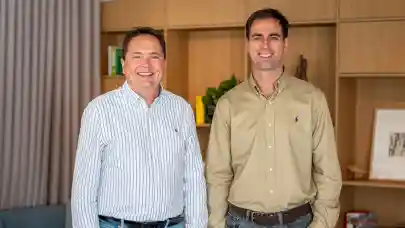
Gal Peleg, CEO of Golden Star Group talked to Property Forum about the potential effects of the war in Ukraine on the Polish office market, the expected supply gap and the reactivation of the long-awaited Lilium project in Warsaw.
I cannot begin with any other question: What impact do you think the war in Ukraine will have on the Polish commercial real estate market? Can we expect a mass outflow of external investors?
It is too early to evaluate the impact on the commercial real estate market and the global economy, as such processes take more time. The war just started a few weeks ago, and its toll is devastating in terms of the atrocities. The immediate impact of the sanctions is already in motion, and the demographic impact of the refugees entering Poland is still fresh in motion. It would depend on whether their spouses join them and contribute to the labour market, or perhaps they will be able to return home. Some companies from Ukraine have already started to relocate to Poland, but the scale of such a trend is yet to be determined. In my opinion, the war will have a stronger economic impact in terms of spill-out of international business moving out of both Russia and Ukraine in the short- to mid-term, and probably also Russian business with an international orientation that will move out of Russia in light of the current circumstances. That being said, we do not monitor any mass outflow of investors.
How did the tenants of your office buildings survive the pandemic? Did many companies demand the renegotiation of contracts?
The pandemic was a fascinating lesson in real estate economic cycles: at the beginning, most of the tenants were in a kind of freeze, which was reasonably understandable due to the unknown risks, which later on led to a different mindset of “living alongside the pandemic” as the world moved on with the vaccines and various waves that evolved. Of course, some of the tenants tried to renegotiate their contracts, and we supported those that had a justified reason. In general, the impact of the pandemic was limited in our assets and mainly affected the leisure segment of hotels. After more than two years when the world was almost “caged” due to lockdowns and various restrictions, it is evident that people feel they want to compensate themselves for this period by different ways of changing their preferences towards consuming more leisure services and spending more, travelling more, and changing their priorities in life.

Gal Peleg
CEO
Golden Star Group
Will the „home office” system stay with us permanently or will companies push for a return to working in the office for most of the week?
The pandemic brought changes in work/life balance that impact the approach towards work in general. The home office was a very good solution during the pandemic when people felt there was a global crisis, and as such were naturally more oriented towards supporting the business in which they were working. Furthermore, the home office requires changes in the home environment, not to mention the lack of fixed work hours. Additionally, the technology adapted quickly to support such a shift. At a later stage, when the crisis was replaced by the “new reality” of living alongside the pandemic, the “emergency mode” did not exist anymore, and the effectiveness of people working in the home office depended more on personal morals and ethics. From across-the-board discussions I had with top managers of international conglomerates, it seems they all witness the same phenomenon. We already see in high tech companies the urge of employees to work and interact in the office. It is part of our human-nature DNA to communicate, integrate and create social synergic productivity. Human nature will not change overnight. It had to adjust temporarily during the pandemic. In some of our countries of operation, we witness a strong boom in the technology sectors, with high demand that is beyond any expectation. People are back in offices spending time together. Basically, it’s like Zoom: a great tool to bridge socially restricted periods, but there is no replacement for the personal contacts and relations of people. Of course, Zoom and other technology tools for communications showed us it is possible to bypass the actual physical presence at work, but it is not the same. We developed throughout the evolution of thousands of years a wide set of social skills that can’t be replaced during two years of social distancing restrictions, and we hear from our tenants that they prefer to be back at the office for various reasons.
Developers in Warsaw have practically stopped all new office projects. Will there be a supply gap in the coming years?
It seems this is the case. It is very natural and part of the real estate cycle. Bear in mind that it takes several years for developers to introduce their properties to the market. Therefore, the pandemic has its toll. Furthermore, we witnessed before the pandemic a record of new developments. As a veteran of the real estate industry with more than 22 years of international experience, I can say that due to the rapid evolution of technology, the rapid flow of information, and globalization, market cycles appear more frequently than in the past, with shorter amplitude.
How do banks currently approach the financing of new office buildings?
Banks seem to take a more conservative approach these days. This is reasonable not only due to the pandemic, but also due to the global macro inflation growth, the war in Ukraine, and other circumstances that impact the capital markets. Nevertheless, banks should be credited for their ability to distinguish between quality office buildings that still remain attractive for financing in comparison to others.
Lilium Tower in Warsaw — What's next for this project? Will we ever see it realized?
The project will be realized and will change the skyline of Warsaw. In fact, we are preparing to realize the project in order to capitalize on the future shortage of supply. Furthermore, the location is the best in Warsaw and will introduce very advanced standards and technologies. With patience comes great reward.
And what other investments is Golden Star Estate planning in Poland for the next 24 months?
We prefer to focus on the Lilium Tower's new development alongside the evaluation of potential value-add investments.