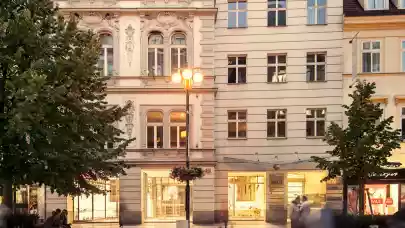
As many as 15 new brands arrived on the Czech retail market in the first six months of this year. Compared with the first halves of the past few years, this is the highest number since 2018, when multiple newcomers were attracted as a result of an outlet centre opening near Prague’s airport. The number of newly arriving brands in the second half of the year has been traditionally higher than in the first half, mainly as a result of the Christmas season. In effect, the number of newcomers this year can be expected to be similar to last year’s 38.
“The Czech retail market remains attractive for international brands; it is often the first one in the Central and Eastern European region where they test their performance. The coronavirus pandemic has not changed anything about that – now that the restrictions have been lifted, customers are largely returning to shopping in physical stores and the local purchasing power is attractive for the brands,” Jan Kotrbáček, Partner & Head of CEE Retail Agency team, Cushman & Wakefield says.
The great majority of the newcomers have opened their first shop in Prague, with six of them opting for high-street locations and five for shopping centres, which is usual with brands arriving on the Czech market. There is also a clear trend of opening shops in office buildings nowadays. This option is popular primarily among brands that focus on technologies and design. It allows them to present their products and services within a generous footprint and a modern environment to a relevant target group of potential customers who work in the office buildings, and the rents are also more accessible to them.
French and fashion brands first and foremost
Four brands arrived from France, two from Slovakia, and one each from the other countries of origin. In line with a long-term trend, the most common are fashion and accessories retailers, and the ratio of those that target the mass market to those in the luxury/premium brands is balanced. Three brands are in the currently popular household equipment and accessories segment, and two are in the F&B segment.
“The openings of many brands‘ shops only in this year’s first quarter can of course be to a certain extent attributed to the uncertainty and restrictions related to the pandemic in the last two years. Many of them for example could not finish the fit-out of their store within the scheduled time plan because of the lack of material for furniture and equipment production. All processes take a bit longer today and certain inertia as long as two or three years. I perceive as positive the fact that customers still have the appetite and need to shop – not out of necessity, but also for pleasure. Brands therefore still have a reason to build new and attractive physical stores to get their products as close to customers as possible. Doing so, they pay attention both to the quality of the premises and to the location where they place it,” adds Jan Kotrbáček.
The behaviour of the retail market players is also influenced by other challenges brought about these days. According to Jan Kotrbáček, even the war in Ukraine also paralysed the retailers‘ decision processes for some time: “However, they orientated themselves quite quickly and adapted to the new situation. Many of them closed a lot of shops in Russia, but will definitely strive to compensate for this market, also in the Czech Republic and the surrounding countries of Central and Eastern Europe. These can be a partial alternative and Czechia will for sure be an attractive market for brands.“
Luxury brands and new projects increase the attraction of Pařížská Street
“The choicest arrivals this year are Chanel and Balenciaga, having opened their first Czech shops in Pařížská Street this June. Both luxury brands will significantly enhance this location, already in-demand and prestigious, and ‘boost’ the north part of the street where two major retail projects, Staroměstská brána and Pařížská 25 are in development,” adds Jan Kotrbáček.
Chanel’s largest and only shop in Central Europe opened opposite the Old New Synagogue, enhancing the attractiveness of Pařížská in the vicinity of the River Vltava and the future Fairmont Golden Prague Hotel. The area around the hotel is currently undergoing comprehensive regeneration, and new retail premises are being set up on the ground floor to offer exceptional lease opportunities to luxury brands. Offering more than 900 sq m of retail space, the beautifully refurbished building at Pařížská 25 will be similarly attractive for them. Both of the flagship projects will considerably contribute to making this part of Pařížská Street more desirable.
Arrivals exceed departures
Retail is a dynamic sector with a lot of developments: new concepts and brands come and others go. This is a natural, constant state of flux that occurs all over the world. The sector seeing the most changes is that of fashion, where competition is generally fierce both in brick-and-mortar shops and online. The last two years, affected by Covid-related restrictions, obviously made the situation more difficult, and some players found it hard to hold their ground alongside fashion chains that offer similar goods on a larger footprint. Generally, they are able to negotiate better lease terms, which makes jostling for positions harder for smaller players.
The fashion brands that exited the Czech market over the past two years include Promod, Camaieu and Pietro Filipi. Celio struggled to retain its position last year; luckily, it found a new partner for the Czech and Slovak markets, where it eventually stays represented by it, and is currently working hard to revive the brand’s position and performance. So far, it appears that the partner, CSAG, has been successful, in particular thanks to a correctly devised omnichannel strategy.
Oftentimes, a brand’s departure is part of its long-term strategy or the outcome of finding out that the specific market does not work for it. At any rate, there are more arrivals than departures, and many brands choose Czechia as the principal destination for tapping the Central European region. The brands come from all segments: in terms of luxury fashion, Versace was one of the brands that opened a shop in our country last year; this year, there were Chanel and Balenciaga. Premium brands worth mentioning certainly include Germany’s Anson’s and Manuel Ritz, as well as last year’s arrival of Halfprice, a Polish multibrand retailer selling discounted premium goods. Modivo and Heavy Tools targeted the mass market, and Primark in Prague’s Wenceslas Square was the most prominent brand to arrive last year. The company plans to open another shop in Brno this year.
“The difficult past period has its winners and losers, and fortune always favoured those who were prepared and able to adapt to the new situation in the best possible way. Consumer patterns evolve very rapidly, and shopping habits change – and brands need to be responsive in order to keep their existing customers and win new ones. It is crucial to constantly innovate while investing in digitalising sales and communicating with clients. While online sales grew due to the radical and unnatural restrictions imposed on the standard retail operations as a result of Covid – and still continue to grow to a lesser extent – customers have started coming back to brick-and-mortar shops. As a result, the overall retail volume is growing. Nevertheless, every brand has a shelf life – and those that do not innovate will become irrelevant. A well-thought-out omnichannel strategy, combining physical and online stores, is a must for staying relevant to customers and catering for all their needs,” Jan Kotrbáček concludes.