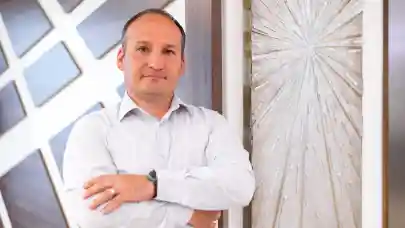
B+N Group has recently announced a significant acquisition, enabling the Hungarian-owned company group to enter the market of Europe’s largest economy. Following the integration of the KÖBERL Group in Germany, the company specializing in facility management and cleaning will operate in nine countries, serving both private-sector actors and major public-sector clients. The company’s international expansion has particularly accelerated in recent years, partly due to increased disinfection standards during the COVID-19 pandemic. Property Forum talked to Ferenc Kis-Szölgyémi, CEO and owner of B+N Referencia Zrt., about current trends, industry developments, labour shortages, robotization, and more.
Your company recently announced its expansion into Germany. What does this mean for B+N?
In December, we signed an agreement to acquire the KÖBERL Group in Germany, so we will now be present in nine countries. Thanks to this transaction, we are not only entering a new market but also a new industry. The KÖBERL Group is one of Germany’s leading facility management and building engineering service providers, and we have now acquired more than a 96% stake in it.
We are already the market leader in the region. Across Europe, we employ nearly 28,000 people, of which 14,000 are registered employees in Hungary, making us one of the country’s largest employers. The primary goal of this German acquisition is to serve the needs of our international clients more comprehensively and to further strengthen the diverse expertise already present within the B+N group.

Ferenc Kis-Szölgyémi
CEO
B+N Referencia Zrt.
Labour shortages pose challenges across Europe, particularly for blue-collar work. How challenging is it for your company to find and retain the right workforce?
The blue-collar workforce that Western Europe lacked was initially replenished from Central and Eastern Europe, but we’ve now reached a point where there are no reserves left here either. In the blue-collar sector, full employment is practically the norm. Significant wage increases could attract more people to the sector, but the market is not there yet.
Even within the sector, certain fields—cleaning in Hungary, for example—are particularly difficult for recruitment. By contrast, in Japan, cleaning is a respected profession. In our Italian subsidiary, only Italian workers are employed as cleaners because the guild system there strictly regulates wages in the sector, ensuring they do not fall far behind the average, unlike in countries of the region.
In Hungary, Poland, Romania, and Bulgaria, however, only those who cannot find work elsewhere or are tied to a specific location for family reasons typically take up cleaning jobs. In this region, the average age of cleaners is also very high, which is why we are constantly working to make this profession more accepted and to offer real career opportunities for younger colleagues. While raising the minimum wage poses significant financial challenges for us, I believe it is necessary for retaining the workforce.
How can technology help solve the labour shortage? Can robots alleviate this issue?
The world is moving in this direction, and robots and artificial intelligence are playing an increasingly important role in all areas of life. For example, in Italy, we work in two decommissioned nuclear power plants, where it is crucial for machines to eventually replace human labour. However, human resources will still be needed to oversee the operation of robots, which is why we are continually training our employees in this area.
That said, the use of robots raises other questions. For example, an average Chinese cleaning robot has about 16–18 cameras and communicates via Wi-Fi. This makes the use of such machines problematic in institutions with areas sensitive from a national security perspective. Our self-developed robots comply with European Union regulations, ensuring that sensitive data does not fall into unauthorized hands.
Has this transformation also led to more order in the labour market?
Black-market employment still causes many problems today. Some competitors can offer better prices because they do not pay contributions to their employees. On the employee side, there is also significant resistance to formalizing employment because many in this demographic face financial restrictions.
For instance, if a bank or debt collection agency takes half of a cleaner’s wages because they co-signed a loan for a child or grandchild—say, for a mobile phone—it’s understandable that they would prefer to work informally and receive cash. No matter how skilled the worker is, this creates competition we cannot match.
We have suggested to the Banking Association and the Ministry of Finance in Hungary that these widespread issues require a solution, such as reducing the maximum impact of wage garnishments. If workers turn to informal employment, they disappear entirely from the purview of banks and debt collection agencies.
B+N has won several significant public tenders in Hungary in recent years, drawing considerable media attention and often criticism. What are your thoughts on this?
In cleaning and facility management, there is substantial state involvement in every country, as governments are typically the largest property owners. It is also a general trend that local companies win state tenders rather than international firms. This is no different in Poland, the Czech Republic, or Western Europe. Our client base reflects this well: in foreign markets, 98% of our orders come from the private sector, while in Hungary, this figure is around 30%.
As a group, even without the entire public sector, we could maintain our current profitability level of 10–12%. With the expansion in Germany, the majority—around 55%—of the group’s revenue will come from abroad.
Today, ESG is an unavoidable topic. How does it manifest in a facility management company’s operations?
We are constantly seeking alternatives, from more efficient energy management to sustainable cleaning products. We focus on and examine how effective eco-friendly cleaning products can be with less chemical use. Additionally, we have been working for years to enhance the social acceptance of blue-collar work.
What do you envision for B+N in the international market 5–10 years from now?
If we can continue growing and developing at this pace for another 2–3 years after the current German transaction, our R&D capabilities could make us a global player. For example, we already have the technology to predict a pandemic with 80% accuracy. The costs of this procedure are currently very high, so there is no real demand for it yet. However, we believe this will change soon, as data is becoming increasingly valuable in this industry as well.