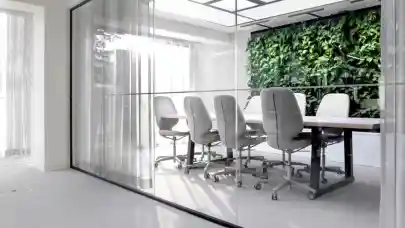
For years, discussions around office lighting centred on visibility, compliance, and energy efficiency. Today, a growing body of research is encouraging the real estate industry to look beyond these traditional measures and recognise light as a strategic component of workplace health, employee experience, and building performance, writes Silviu Bulzan, Sales Leader, Office & Industry SEE at Signify, in an article for Property Forum.
As employers continue refining their workplace strategies in a hybrid-working era, office buildings provide environments that support employee experience, comfort, and occupant satisfaction. While amenities, flexible layouts, and sustainability credentials often dominate the conversation, one of the most influential workplace factors remains largely invisible: light.
The workplace challenge hiding in plain sight
Most office workers spend the majority of their day indoors, often under lighting conditions originally designed to support visual tasks rather than human biology. While these environments may provide sufficient illumination for work, they frequently fail to replicate the intensity and composition of natural daylight that humans evolved with.
This discrepancy has become increasingly relevant as research suggests links between daytime light exposure and alertness, mood, sleep quality, cognitive performance, and overall well-being.
For employers looking to create attractive workplaces and for landlords seeking to differentiate their office assets, these findings raise an important question: can the indoor lighting environment better support the people who use the building every day?
Understanding the biological impact of light
The answer lies in discoveries made over the last two decades regarding how light affects the human body.
Scientists identified a previously unknown class of photoreceptors in the eye called intrinsically photosensitive retinal ganglion cells (ipRGCs). These receptors contain a light-sensitive photopigment known as melanopsin and are directly involved in regulating circadian rhythms, sleep-wake cycles, alertness, and other biological responses. They are particularly sensitive to wavelengths in the blue-cyan region of the visible spectrum.
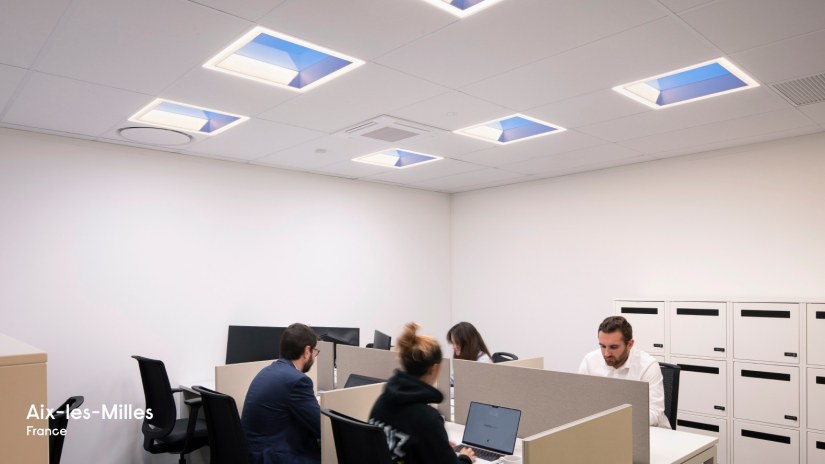
This has led to growing interest in melanopic lighting, an approach that considers not only how well people can see, but also how effective lighting supports the body's internal clock. The objective is not to replace daylight, but to help recreate some of the characteristics of natural daylight indoors.
Bringing the benefits of daylight indoors
Advances in LED technology now allow lighting systems to do much more than simply illuminate a workspace.
Modern tunable lighting solutions can adjust light intensity and colour temperature throughout the day, helping create lighting conditions that are better aligned with natural circadian patterns.
Research suggests that higher daytime exposure to melanopically effective light may help align indoor lighting conditions more closely with natural circadian patterns. This remains scientifically defensible and avoids health claims.
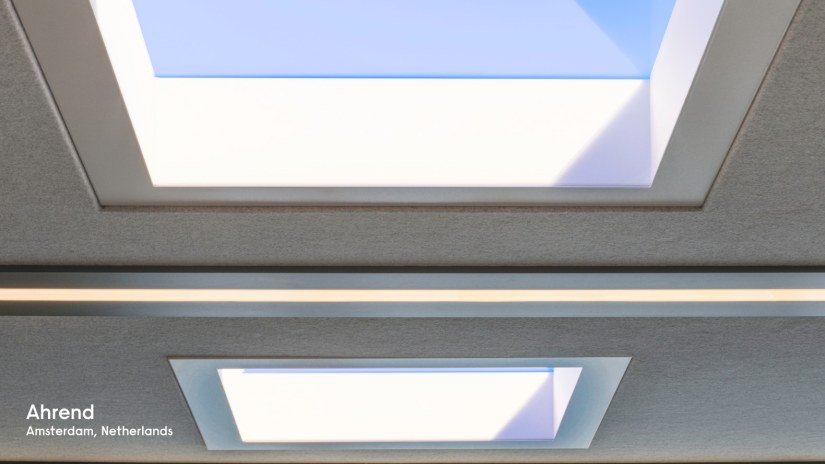
Innovations such as spectrally optimised lighting technologies, including Signify's BioUp technology, are designed to increase melanopic effectiveness while maintaining visual comfort and energy efficiency. By introducing carefully controlled adjustments to the light spectrum, these solutions are designed to support the body's biological clock throughout the working day.
Healthy lighting and the next evolution of ESG
As sustainability strategies mature, building owners are increasingly looking beyond energy performance alone.
The "S" in ESG is attracting greater attention, with organisations seeking measurable ways to improve occupant health, comfort, and well-being. In this context, healthy lighting is becoming an important element of broader healthy-building initiatives.
This shift is reflected in certification programs such as the WELL Building Standard, which includes dedicated criteria related to light exposure, visual lighting design, and circadian lighting design. The standard acknowledges that workplace lighting should not only enable good vision but also support the physiological needs of building occupants.
For developers and investors, these considerations are increasingly linked to asset value. According to a 2021 study by the MIT Real Estate Innovation Lab, office buildings certified under healthy-building frameworks such as WELL and Fitwel achieved rental premiums of 4.4% to 7.7% compared to comparable non-certified properties. Such findings suggest that investments in occupant well-being can create tangible business benefits alongside environmental performance improvements.
A competitive advantage for the modern office
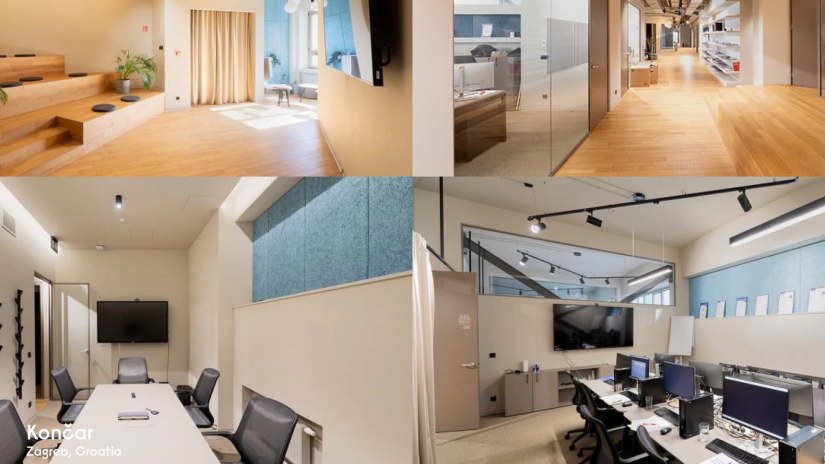
The role of the office continues to evolve. As organisations encourage employees back to shared workplaces, the quality of the indoor experience is becoming a key differentiator.
Occupants increasingly expect workplaces that support focus, comfort, collaboration, and well-being. For property owners and occupiers alike, lighting therefore represents more than a technical building service. It has become part of a wider conversation about employee experience, workplace performance, and the long-term attractiveness of commercial real estate.
Growing scientific evidence suggests that light influences far more than vision alone. As awareness continues to grow, healthy lighting is poised to become a standard component of high-performing office environments, helping create buildings that are not only more sustainable, but also more valuable, desirable, and human-centric.
Ready to transform your workspace? Explore how smart lighting can elevate your office environment by visiting Signify Office Lighting Solutions.

Silviu Bulzan
Sales Leader Office & Industry SEE
Signify
Silviu Bulzan has over 10 years of experience in the lighting industry and has contributed to the development of projects that have strengthened Signify’s position as a leader in innovation and sustainability. Throughout his career, he has promoted an approach that views lighting not merely as a technical necessity, but as a strategic element capable of supporting energy efficiency, building digitalisation, and project differentiation in an increasingly competitive market. Currently serving as Sales Leader Office & Industry SEE, he oversees the development of the office and industry segments across Southeast Europe and collaborates with developers, designers, and partners to implement smart, connected, and sustainable lighting solutions.
Contact:
Via email: silviu.bulzan@signify.com
Via LinkedIn: https://www.linkedin.com/in/silviu-bulzan/