Limited new supply, falling vacancy and increasingly demanding occupiers are changing the dynamics of Bucharest's office market. At SEE Property Forum 2026, experts discussed how landlords can respond through refurbishment, sustainability investments, mixed-use concepts and better building management, while new development gradually returns to the market.
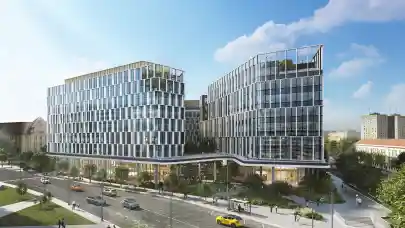
Bogdan Bogatu, Director, Office Agency at Cushman & Wakefield Echinox, identified limited supply and rising rents as two of the defining features of the current market. Bucharest saw only around 15,000 sqm of new office space delivered last year and around 20,000 sqm this year, while approximately 200,000 sqm of new stock is expected over the coming years. Vacancy has fallen to around 11%, although the headline figure masks significant differences between locations, with some areas recording vacancy of 20-30% while stronger locations are below 5%. Bogatu expects well-connected locations to remain the clear winners. Occupiers are increasingly focused on ESG credentials and green certification, but connectivity, employee experience and costs remain fundamental considerations.
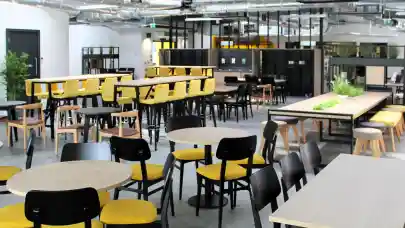
Andreea Cotiga, Head of Leasing Office at CPI Romania, said landlords can no longer rely on conventional standalone office buildings to command premium rents. Projects combining quality workplaces with retail, green public areas, dining and other amenities are becoming more attractive as companies look for ways to encourage employees to spend more time in the office. Sustainability and energy efficiency have also become basic requirements, particularly for blue-chip occupiers with corporate net-zero targets. Cotiga argued that the overall concept can ultimately create the greatest value, particularly when offices form part of community-driven, hospitality-focused environments. She estimates that the strongest projects in central and semi-central Bucharest can command rental premiums of 10-12%.
Emma Toma, Head of Office Division at AFI Romania, highlighted the growing potential of refurbishment as an alternative to new development. Although tenants often initially prefer new buildings, well-located existing assets can remain highly competitive if landlords continually invest in them. Older buildings increasingly require substantial upgrades to common areas, technical systems and sustainability performance, while regular capex is essential to prevent them from falling behind the market. Looking further ahead, Toma expects mixed-use developments to be particularly resilient, combining offices with retail, residential, hospitality and services. AFI is also pursuing LEED Zero Carbon certification across its office portfolio, reflecting the growing importance of sustainability for both occupiers and the long-term value of assets.
Mihaela Petruescu, Country Director for Property Services Romania & Poland at Nhood, focused on opportunities to protect asset value without necessarily committing to major capex programmes. With service charges expected to increase by around 10% this year, careful management of operating expenditure is becoming increasingly important. Petruescu highlighted three priorities: greater discipline and transparency around service charges, closer monitoring of energy and utility consumption, and stronger tenant engagement. Mixed-use environments can also make office locations more attractive by providing employees with retail, hospitality, green space and other services within the same ecosystem.
Răzvan Nica, Managing Director at BuildGreen and Carbon Tool, argued that sustainability has moved from an optional investment to a basic requirement for office assets. Banks, investors and tenants increasingly require data and transparency on building performance, forcing owners to improve monitoring and gradually upgrade equipment and systems. This is particularly relevant for office buildings developed around 15 years ago, where major technical equipment is now reaching the point at which replacement or substantial refurbishment becomes necessary. Rather than abandoning these assets, Nica sees owners continuing to invest in retrofits to keep them competitive.
Radu Tar, Head of Workplaces & Construction at Coral Companies, warned that the cost of maintaining an ageing office building goes well beyond the direct cost of replacing equipment. Older systems consume more energy and require more reactive maintenance, while unexpected repairs can disrupt occupiers and increase service charges. There is also a commercial cost to doing nothing, as less competitive buildings can face pressure on rents and higher tenant incentives. Tar would prioritise design and the employee arrival experience in a refurbishment programme, followed by indoor environmental quality, HVAC, energy efficiency and improvements to the building envelope and shared spaces. He also recommended that investors with standing portfolios conduct a technical due diligence exercise at least every five years to understand how their assets are performing.
The discussion, chaired by Ioana Roman, Partner and Head of Real Estate at Filip & Company, showed that there is no single answer to Bucharest's new office equation. Location and connectivity remain fundamental, but sustainability, building performance, amenities, operating costs and employee experience are increasingly determining which assets outperform. With new supply still limited and tenants becoming more selective, well-located existing buildings that are upgraded before they become obsolete could be among the strongest beneficiaries of the next phase of the market.