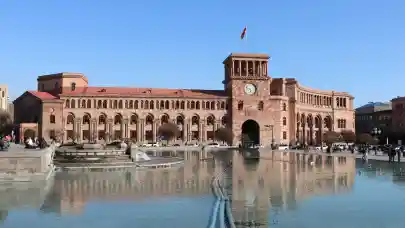
Yerevan is seeking to attract international investors, developers and construction companies as Armenia's capital advances a series of urban regeneration and infrastructure projects designed to create new commercial districts, improve connectivity and revitalise existing neighbourhoods.
The initiatives range from a proposed mixed-use downtown district to the completion of a landmark cultural complex, heritage regeneration and major transport improvements.
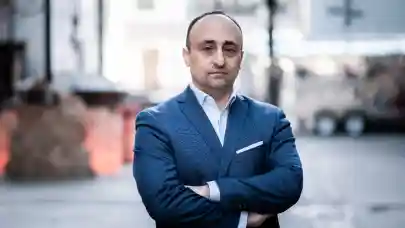
Helping translate these ambitions into projects is the Yerevan Urban Development Investment Project Implementation Unit (PIU), which oversees the preparation and delivery of major municipal infrastructure investments. Its director, Aneta Babayan, emphasises the importance of moving from plans to implementation.
"A strong vision for a city matters only when it can be translated into projects that deliver real results," she says. "These investments also create opportunities for international companies to contribute their expertise, technologies and experience."
One of the largest proposals is Noragyugh Downtown, which envisages transforming an existing district into a new commercial and residential centre, combining offices, housing, public services, green spaces and supporting infrastructure.
The project could establish an additional centre of economic activity beyond Yerevan's historic core. In September 2026, Mayor Tigran Avinyan discussed its development concept and potential investment opportunities with representatives of Royal Front Investments and Dubai Duty Free. However, arrangements for private-sector participation have yet to be finalised.
Another significant initiative is the Cascade Cultural Hub, which aims to complete the unfinished upper section of one of Yerevan's best-known architectural landmarks.
The approximately 30,000 sq m development is planned to include a 1,000-seat concert hall, contemporary art museum, exhibition areas and recreational facilities. Its architectural concept draws on work by French architect Jean-Michel Wilmotte.
In December 2025, the municipality signed an implementation agreement with GTB Development LLC. Beyond its cultural significance, the project could strengthen the surrounding area's appeal as a destination for visitors, businesses and leisure activity.
Heritage-led regeneration is another emerging priority. In Kond, one of Yerevan's oldest neighbourhoods, the municipality is developing a regeneration concept covering approximately 10 hectares.
The proposals seek to modernise infrastructure, improve living conditions and public spaces, and encourage local businesses and tourism while preserving the district's historic character.
A public-private-community partnership model is under consideration, although the project remains at an early stage. Resolving longstanding property-rights issues and protecting residents' interests will be important considerations as plans advance.
The city's ambitions also extend to its natural environment. In April 2026, the municipal council approved a recreational development initiative covering 5.5 kilometres of the Hrazdan Gorge, incorporating pedestrian routes, landscaped areas and sports facilities.
In October, the gorge received protected-landscape status, placing environmental conservation at the centre of future development. Although not a conventional commercial property opportunity, the initiative forms part of efforts to improve Yerevan's public realm and attractiveness.
Infrastructure supporting urban development
Alongside regeneration, Yerevan is pursuing transport investments that could influence future development patterns.
The planned Ajapnyak Metro extension, which would add the capital's 11th station, is among the flagship projects. Its design documentation received a positive assessment from state experts in June 2025, while the municipality has initiated a separate urban development investment process for land adjoining the proposed station.
This creates potential for transport-linked commercial development and neighbourhood regeneration, subject to further approvals and implementation arrangements.
Further initiatives include modernisation of existing metro infrastructure, preparatory work on the proposed Surmalu station and major road connections. A principal construction contract for the Asian Development Bank-supported Isakov–Arshakunyats Road Link was signed in May 2026.
The municipality is also preparing an electric urban mobility programme with the ADB, alongside investments in energy-efficient public buildings.
Mayor Tigran Avinyan says the objective is to create conditions for future development rather than simply respond to existing demand.
"We want to build a capital where modern infrastructure, economic opportunity and quality of life reinforce one another," he says, highlighting the importance of international investment and partnerships.
With several major initiatives progressing and others taking shape, the focus is now on translating the city's development vision into tangible projects. The combination of municipal infrastructure investment, private-sector participation and urban regeneration could play an important role in shaping Yerevan's next phase of development.