Retail markets across EMEA are showing resilience despite weaker consumer confidence and ongoing economic uncertainty, according to Colliers' latest EMEA Retail Snapshot. Real retail spending is expected to grow by 1.8% across EMEA in 2026, though performance varies significantly between markets. Consumer confidence remains subdued, with EU confidence falling to -19.8 in April 2026 following geopolitical shocks before partially recovering over summer, only to drop again in September amid higher inflation and the prospect of prolonged elevated interest rates.
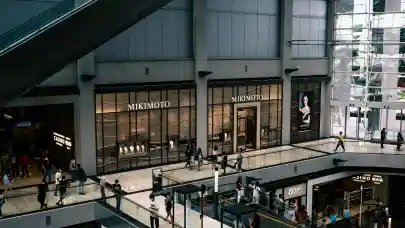
"The subdued spending environment is driving a polarisation in the retail market in Europe," said Larissa Towey, Senior Analyst, Operational Real Estate, EMEA Research at Colliers. "Key retailers are focusing on strategic flagship stores in key locations, rather than secondary locations and broader network expansion. As a result, demand is increasingly concentrated in prime destinations and dominant retail formats."
Retail investment accounted for 15% of total EMEA investment activity in the first half of 2026, with preliminary figures to end of the third quarter pointing to volumes trending down from €25.4 billion at the same point in 2025 to €21.5 billion. Investor appetite remains strongest for grocery-backed assets, supermarkets and retail parks, though shopping centres are attracting renewed attention as pricing stabilisation creates repositioning opportunities. Notable transactions included Kering's sale of a majority stake in Via Monte Napoleone 8 in Milan to Al Miraq Group for €1.1 billion, Landsec's agreement to acquire 100% of the Metrocentre in Gateshead for approximately £516 million, and AFI Europe's acquisition of six retail parks from MAS in Romania, advised by Colliers Romania, for approximately €282 million.
Across the occupier market, retailers including H&M and Inditex continue to refine their store networks, concentrating on flagship locations in prime cities rather than pursuing broad expansion. Limited availability of prime space in destinations such as London, Paris and Milan continues to support retailer demand and underpin rental resilience, while leasing activity in secondary locations remains more constrained. Retailer sentiment across the EU turned negative in September 2026, recording -4, reflecting a more cautious outlook for the coming quarter.
Rental performance across EMEA retail markets has remained broadly stable in 2026. Most high street and shopping centre markets reported stable prime rents in the first half of the year, with some growth recorded in Birmingham, Copenhagen and Brussels. Around 83% to 89% of EMEA markets anticipate rental stability over the next 12 months, with Dublin and Budapest among the exceptions expecting further growth. High street retail yields averaged 4.16% net initial yield across Europe as of the second quarter, while shopping centre net initial yields stood at 6.31%.
The report concludes that polarisation remains a defining trend, with prime assets and dominant schemes continuing to outperform secondary locations. Retailers are expected to continue prioritising prime flagship stores amid ongoing network rationalisation, while investors favour defensive, income-led formats with secure occupier demand. Secondary assets face a more challenging outlook unless supported by strong local fundamentals or credible repositioning plans.